The CMO vs. The Admin
Imagine this scenario: A global brand spends six months and ₹50 Lakhs developing a polished TVC. They focus-group every frame. They launch it. It gets a polite nod from the industry.
Meanwhile, a 22-year-old social media admin at a rival startup spends 10 minutes making a meme on Canva about a trending topic. It gets 50,000 shares, reaches millions, and dominates the conversation for 48 hours.
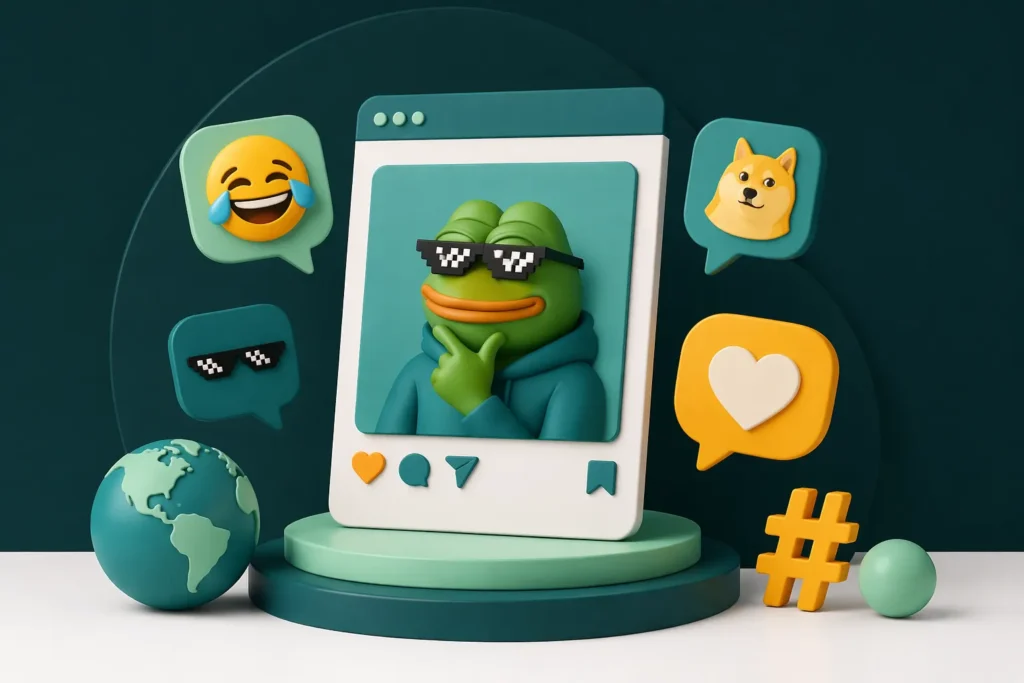
This is Memefluence and the new power of internet culture in marketing.
For a long time, traditional agencies dismissed memes as “filler content.” But in 2025, viral creative strategy isn’t just a tactic; it is the primary language of the consumer. If your brand doesn’t speak it, you aren’t just boring, you are functionally illiterate in the modern marketplace.
The Shift From “Interrupting” Culture to “Becoming” Culture
Advertising used to be about interruption. You watched a cricket match, and a brand interrupted it to sell you soap.
Today, moment marketing trends thrive because the audience blocks ads, but they share memes. Why? Because memes are “inside jokes” at scale. When a brand successfully participates in a meme, they aren’t selling; they are signaling: “We get it. We are one of you.”
This shift requires a fundamental change in how we view “Brand Guidelines.” The brands winning today are the ones willing to loosen their tie and play in the chaotic sandbox of the internet.
The ROI of Relatability: Why Lo-Fi Beats Hi-Fi
There is a growing demand for “Lo-Fi” content.
A perfectly lit studio shot feels like a sales pitch. A grainy, zoomed-in screenshot with Impact font feels like a conversation.
This is the core of a modern meme marketing strategy India.
Consumers trust content that feels “made by a human,” not “approved by a committee.”
Netflix India is a master of this. They don’t just post trailers; they post out-of-context screenshots that act as reaction images. They turn their product into a vocabulary.
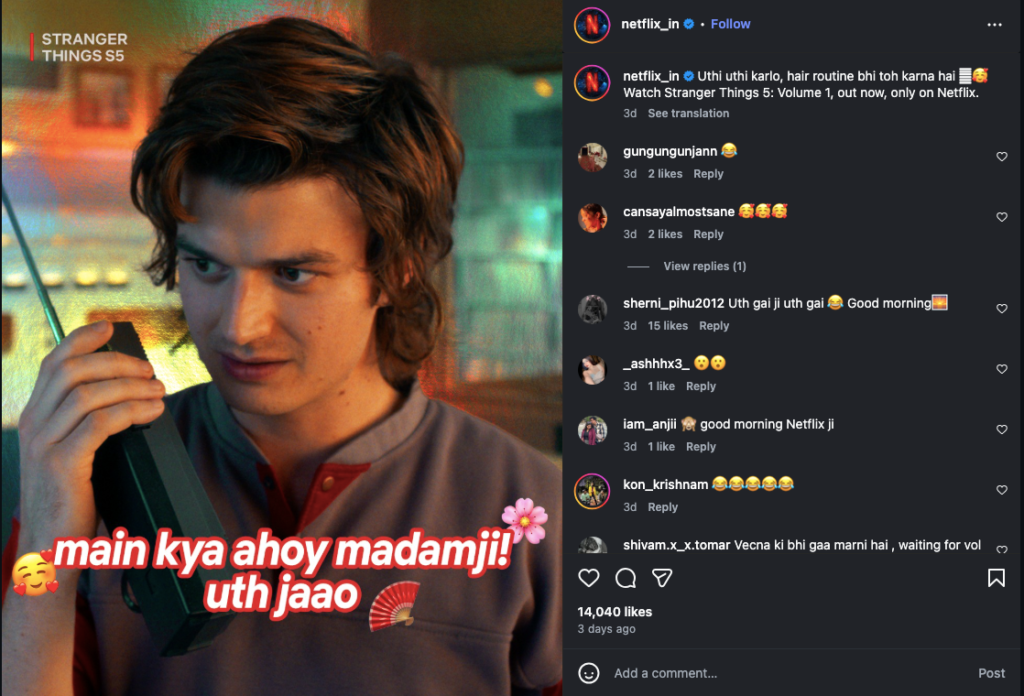
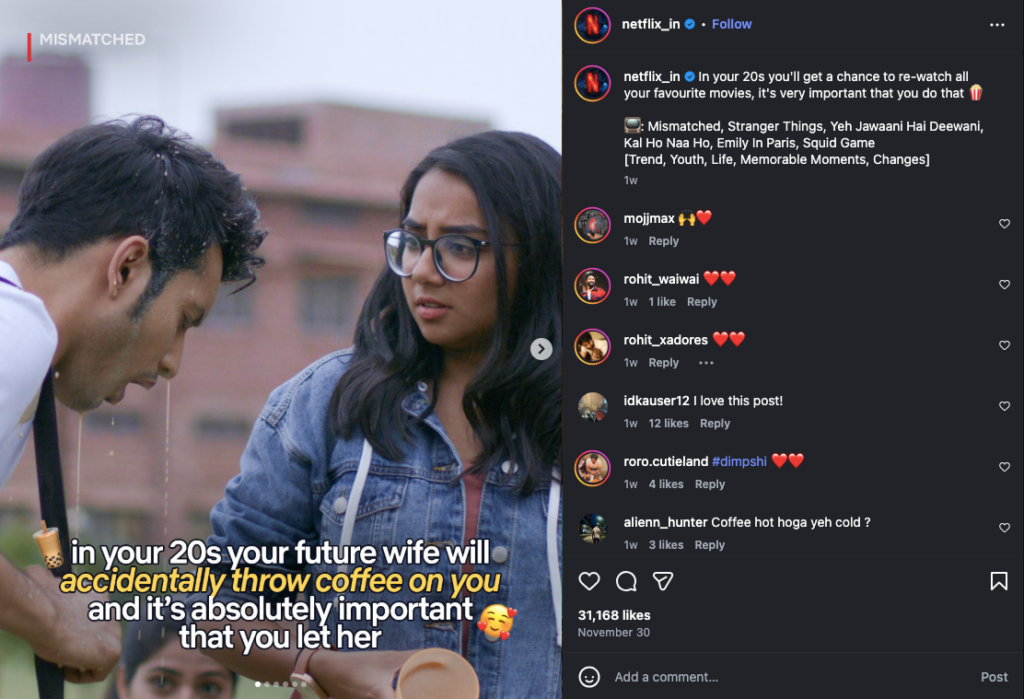
By prioritizing brand relevance in pop culture over visual perfection, brands can achieve an ROI that traditional media buying simply cannot match: the cost of entry is zero, but the payoff is cultural dominance.
The Indian Context: When Bollywood Meets the Algorithm
India is the meme capital of the world. Our internet culture in marketing is a chaotic, beautiful mix of Bollywood dialogues, cricket heartbreak, and localized slang.
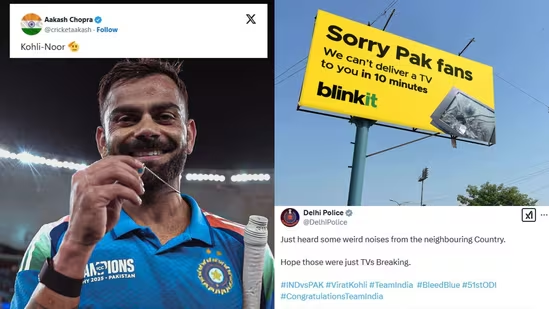
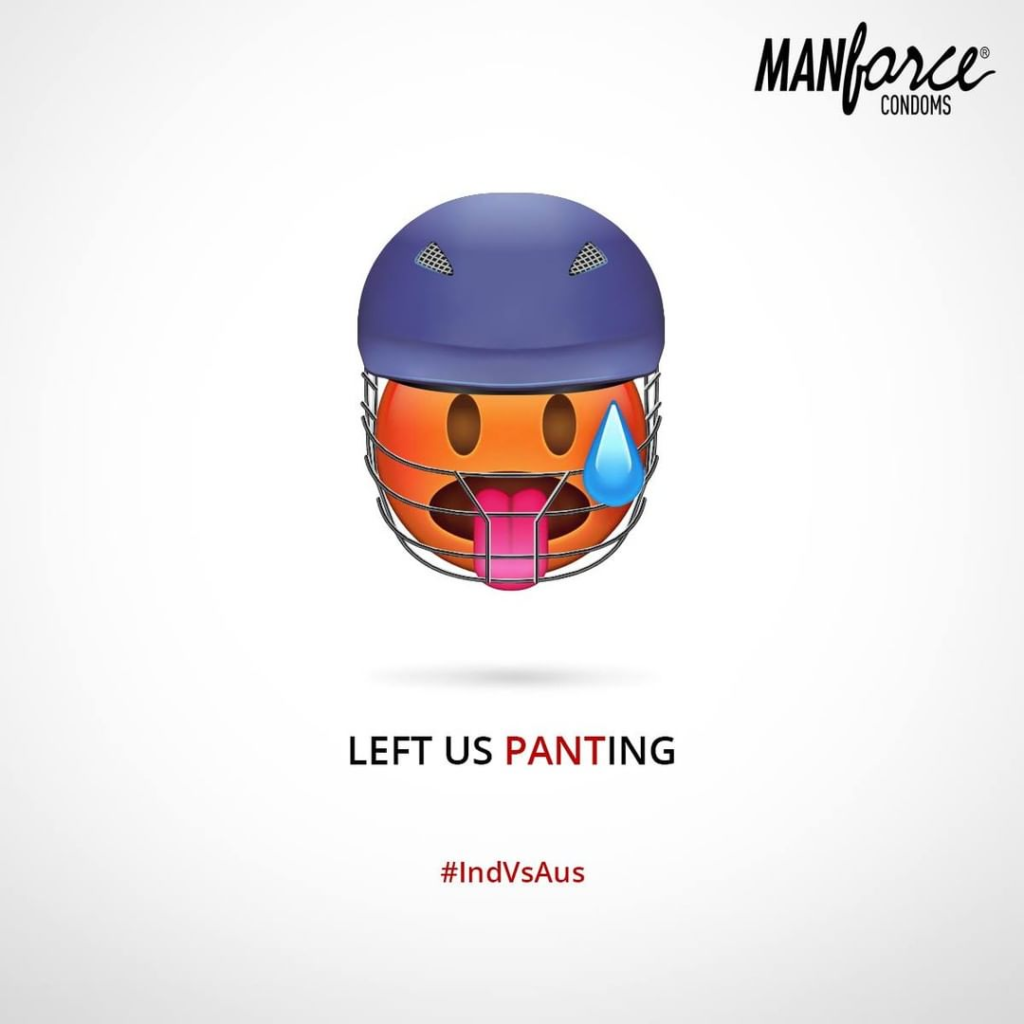
For a creative agency, this presents a unique challenge. You cannot simply translate a western trend. A “skibidi toilet” reference might fly over the heads of a Tier-2 Indian audience, but a “So beautiful, so elegant, just looking like a wow” reference (even if dated now) instantly bridges the gap.
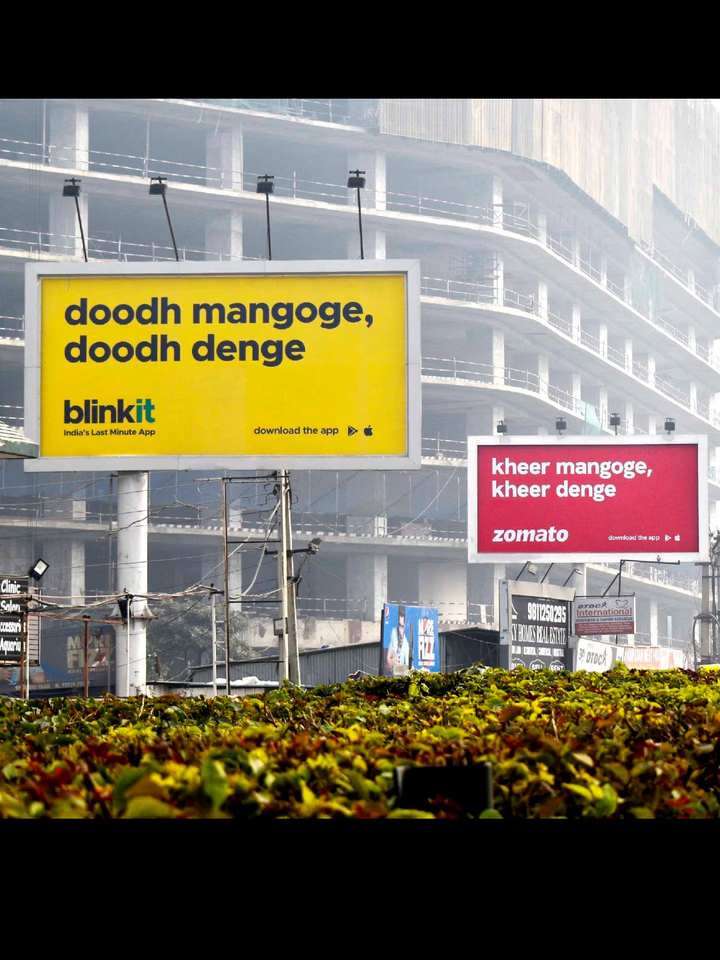
Moment marketing trends in India move at lightning speed. Remember the Blinkit x Zomato billboard collaboration (“Doodh mangoge…” “Kheer denge”)? It was simple, text-based, and culturally rooted. It went viral not because of the design, but because of the context. It turned a billboard into a meme format that every other brand immediately copied.
The Rules of Engagement: How to Avoid the “Cringe”
The danger of meme marketing is the “Steve Buscemi Effect”—the older gentleman trying to dress like a teenager (“How do you do, fellow kids?”).
To navigate this, we follow three rules:
Speed is Safety: If you are three days late to a trend, do not post it. An old meme is worse than no meme.
Respect the Format: Do not force your product where it doesn’t fit. If the meme is about “emotional damage,” don’t try to twist it into selling insurance unless the link is genius.
Punch Up, Never Down: Internet culture rewards self-deprecation. Duolingo is famous for threatening its users. It works because the brand is the “villain” of the joke, not the user.
From Factory to Newsroom
To survive in the meme economy, brands must change their internal wiring.
Traditional marketing operates like a Factory: linear, slow, and obsessed with perfection. (Brief → Strategy → Copy → Design → Approval → Publish).
Modern marketing must operate like a Newsroom: fast, reactive, and obsessed with timing.
You cannot wait for three rounds of legal approval for a moment marketing post. By the time it is approved, the moment is gone. We need to build frameworks that allow for “safe agility” giving creative teams the freedom to react to culture in real-time within pre-agreed boundaries. Perfection is the enemy of relevance.
Conclusion
The internet is a party. Most brands stand in the corner handing out business cards. The brands that win are the ones on the dance floor, learning the steps as they go.
At Narrative, this is exactly how we approach culture-led creative thinking. We help brands stop broadcasting and start participating—by reading the room, reacting in real time, and showing up with ideas that feel native to the internet, not imposed on it.
Is your brand ready to stop broadcasting and start participating?