• Brand Design – How brand personality becomes something people can actually see

    Brand Design – How brand personality becomes something people can actually see

    Branding Series Stage 04 of 04

    Brand
    Design

    How brand personality becomes something people can actually see.

    Rohit 6 min read
    Recap
    This is the last stage of the series — where everything we’ve explored about the brand finally takes visual shape.

    We arrive at brand personality through conversations with stakeholders and industry and competitive research, while working alongside on brand strategy. All of this becomes raw material to work on the visual identity of the brand.

    Visual identity is the face of your brand. The personality we’ve built needs a visual for the audience to relate to.

    Brand design also helps in making sure of consistency in communication — colours, imagery, graphics, patterns, icons, everything that is visible to the audience.

    Good brand design follows a sequence — five steps that take a brand from feeling to form.

    Step 1
    Personality Slider
    Step 2
    Mood Board
    Step 3
    Logo Direction
    Step 4
    Logo Design
    Step 5
    Brand Usage Book

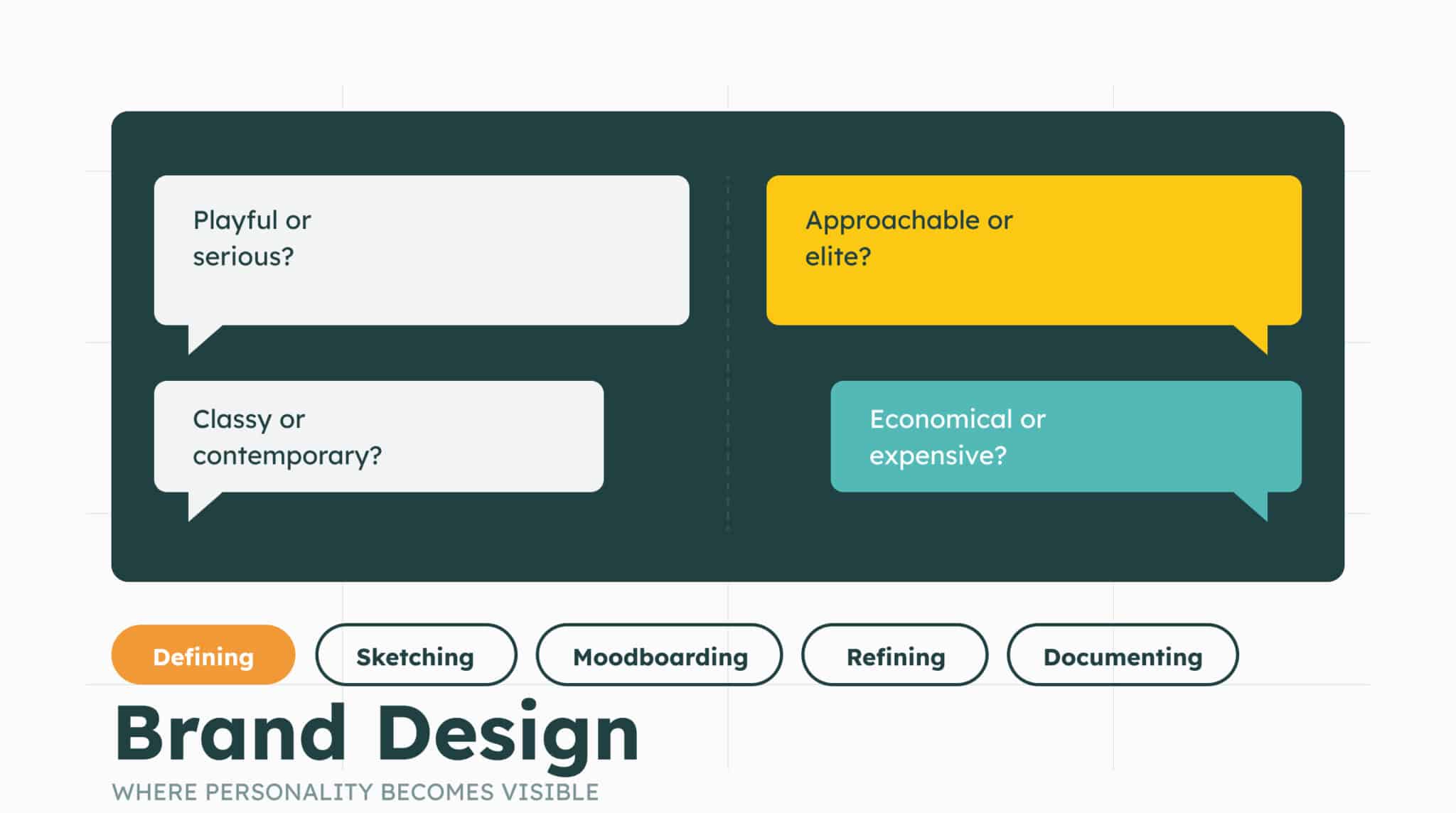
    Step 1 — Personality Slider. I believe this is a good starting point for brand visual identity design. It answers some very important questions that decide how your brand is going to look — is it playful or serious, unconventional or mainstream, approachable or elite? We plot every trait on a slider like this:

    Brand personality slider showing seven traits plotted on a spectrum

    Every point is checked on the slider, so we know exactly what kind of visual identity we’re creating.

    Step 2 — Mood Board. We have a direction now. It’s time to work on a couple of moodboards to arrive at the look and feel. A moodboard is a collage, and it contains font system, colour scheme, indicative photography, and graphics or textures.

    Work on as many moodboards as you want, but don’t present more than 3 options to the client — they tend to get confused. Connect every moodboard back to the personality we’ve already worked on.

    Step 3 — Logo Direction. Basis the moodboards, we now work on logo direction. Clients may not be able to visualise the logo unit with the moodboards alone, hence it is good to work on logo directions — each moodboard gets one. Now the client is able to see how their logo will look. It’s good to show them some mock-ups so they can visualise it better.

    Step 4 — Logo Design. Once the client has taken a decision on one logo direction, it’s time to get into the details — logo construction, golden ratio, typeface clean-up, logo colours, refinement of the logo mark, and the logo suite (primary logo, secondary logo, logo mark, word mark) etc.

    Do print the logo in different sizes and on different papers too, to see the output. What we see on screen versus print can be very different.

    Step 5 — Brand Usage Book. The brand book is the holy bible. It is important to document each and everything that may come to use when someone is building communication for the brand. One must show examples, so it’s easy for anyone to understand and implement.

    A brand isn’t truly built until it’s seen, felt and remembered — that’s exactly what good design does.

    Have questions about brand design?
    Reach out — I am happy to help you think it through.
    rohit@narrative.asia
    Let’s give your brand a face worth remembering.
  • Brand Strategy – What it means, what it involves, and how to create one that works in reality

    Brand Strategy – What it means, what it involves, and how to create one that works in reality

    Branding Series Stage 03 of 04

    Brand
    Strategy

    What it means, what it involves, and how to create one that works in reality — not just on paper.

    Rohit 6 min read
    Recap
    Every brand wants to be unique — unique in how it is seen, experienced and felt by the customer. Brand strategy is how you make that happen.

    Brand strategy is where we create — or fix — the important elements of a brand to build a character. Almost a human character. It gives the brand a purpose, a voice, a personality and a position in the world.

    It is the foundation that everything else is built on. Visual identity, communication, campaigns — all of it flows from here.

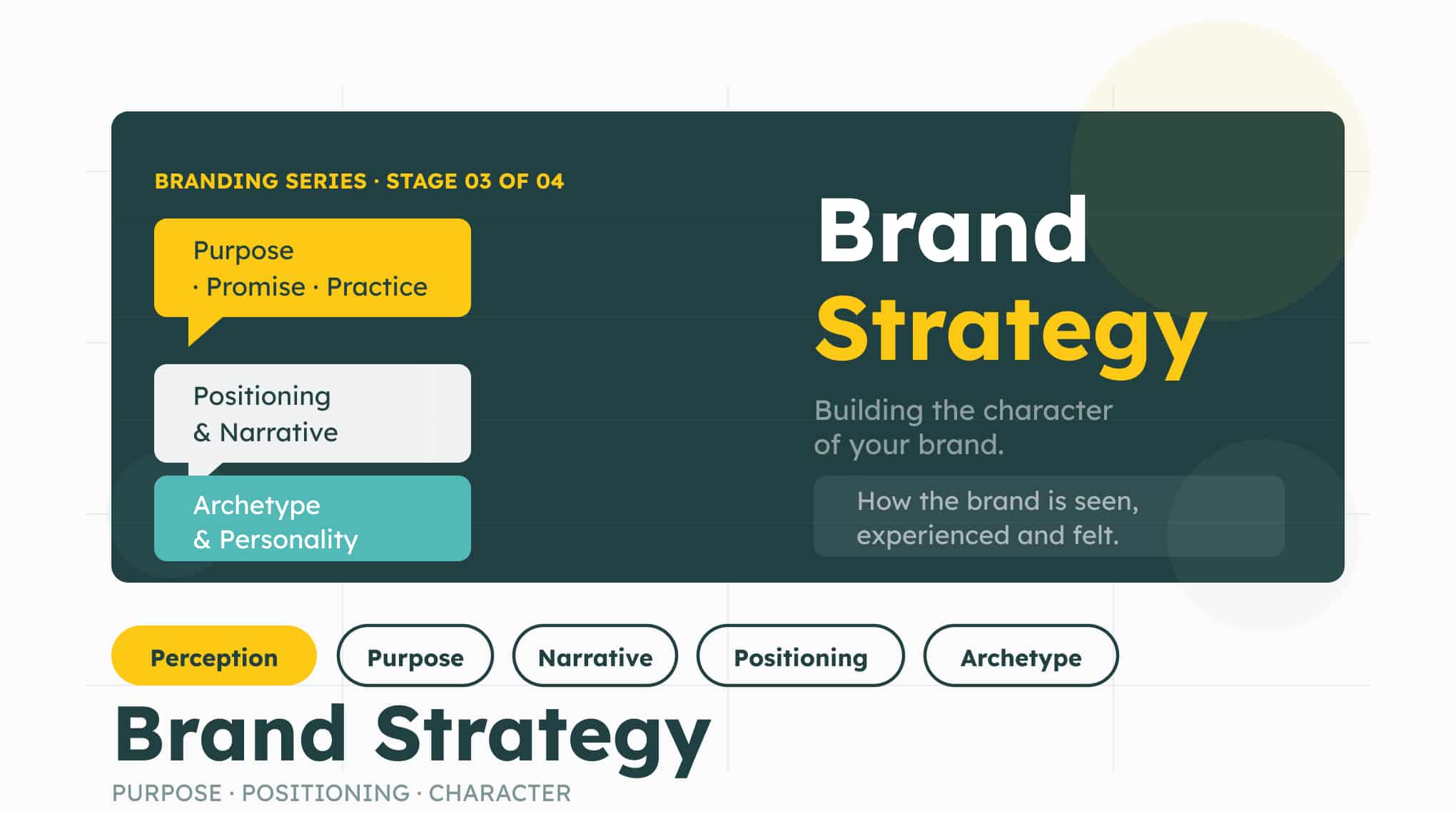
    Brand strategy looks at many interconnected elements — each one contributing to the whole. Here are the core ones:

    Element 01
    Perception Shift
    How the brand is seen today — and how it wants to be seen in the future.
    Element 02
    Purpose
    The problem you are solving. Your reason for existence.
    Element 03
    Promise
    The commitment you make to your customers — and stand by, every day.
    Element 04
    Practice
    Action. Align the internal team so they live the brand in everything they do.
    Element 05
    Narrative
    Your story — the one you want to tell to the world.
    Element 06
    Vision & Mission
    Vision is your long-term goal. Mission is the roadmap to get there.
    Element 07
    Positioning
    How differently you want to stand against competition — your unique space.
    Element 08
    Articulation
    The tagline. In 3–4 words, communicate a larger purpose — emotional or rational.
    Element 09
    Archetype
    The character framework that defines who the brand is at its core.
    Element 10
    Personality
    The human traits and character of the brand.
    Element 11
    Expression
    How the brand is seen, experienced and felt across every touchpoint.
    These elements together create the complete brand strategy. It is complex, it takes time — and it is absolutely worth it.

    “How” is always the difficult question. There is no one right way — but there is a starting point.

    1
    Start with your data
    Everything you gathered in Discovery and Research is your raw material. Data is just data — until you find the insights hiding inside it.
    2
    Find the insights
    Make sense of everything you have collected. Look for patterns, contradictions, and moments of truth. Insights are your starting point for strategy.
    3
    Write answers for every element
    Use the insights and start writing. Question everything until you are convinced. The more you do this, the sharper you become.
    4
    Learn by doing
    Case studies help. But there is no substitute for getting your hands dirty. That is how you build the craft.

    The brand story is not just written on paper — it needs to be told to the audience at every given opportunity.

    Have questions about brand strategy?
    Reach out — I am happy to answer.

    rohit@narrative.asia
    Let’s build a strategy that means something.
  • Why Research Matters, What to Look For, and How to Stay Focused—Without Getting Lost

    Why Research Matters, What to Look For, and How to Stay Focused—Without Getting Lost

    Branding Series Stage 02 of 04

    Brand
    Research

    Why research matters, what to look for, and how to stay focused — without getting lost.

    Rohit 6 min read

    Narrative Asia founder, brand strategist, TEDx speaker, Rohit Varma brings over 25 years of experience in building powerful narratives that connect brands, people, and culture through meaningful storytelling.

    Recap In the previous blog, I wrote about Brand Discovery — Stage 01: what it is, why it matters, and how to do it effectively through stakeholder conversations.
    Often we get lost when we start researching — and it happens because we are not clear on what we are actually looking for. The key is to define your outcome before you begin.

    We need insights — and research is the only way to get them. On their own, neither discovery nor research is enough. Together, they give you a complete picture of the audience, the competition, and the industry.

    Research also helps you understand the current perception of the brand — critical for rebranding or a brand refresh — or to identify the narrative you want to create for a new brand.

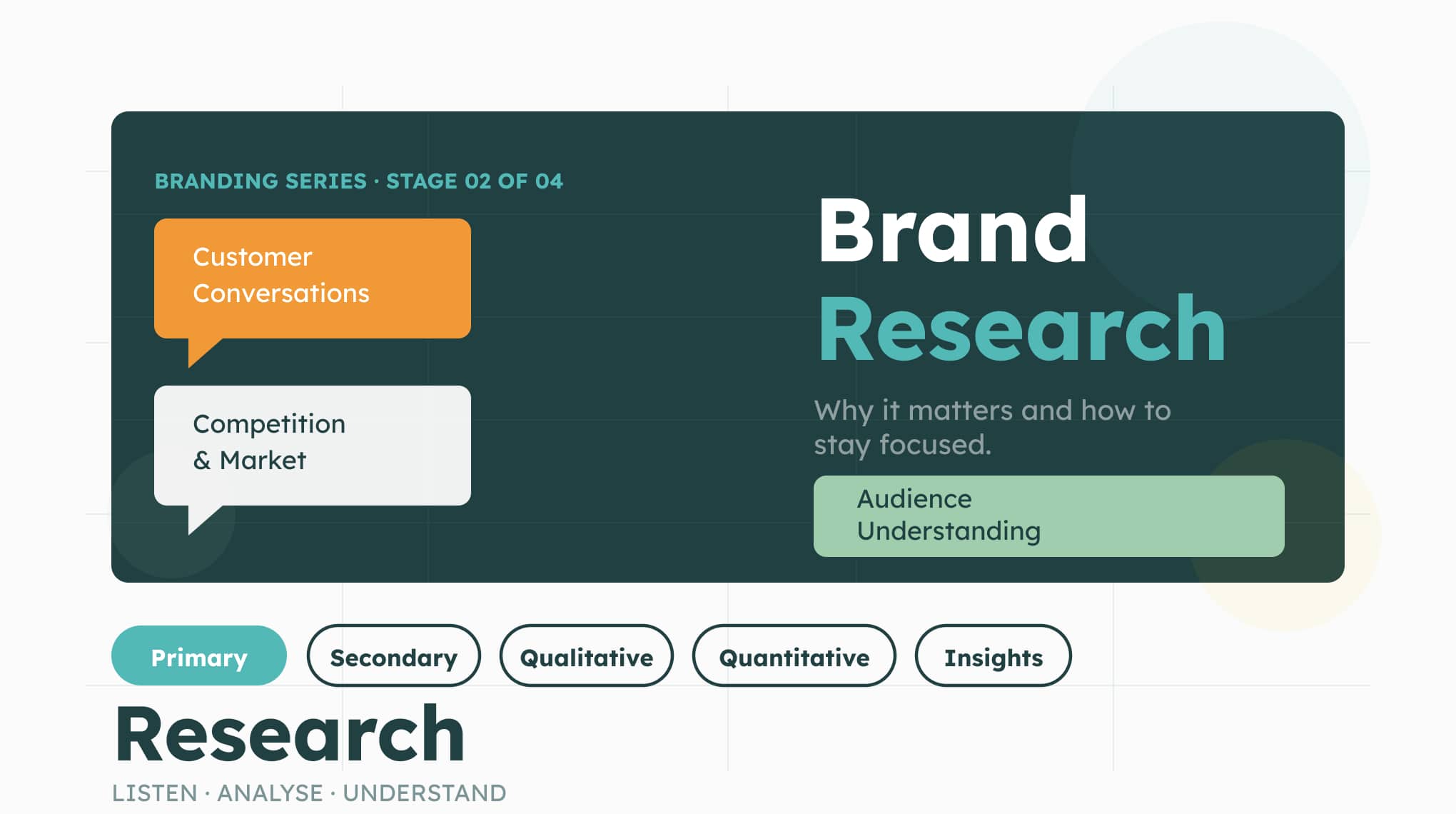
    Discovery covered stakeholder conversations. Now it is time to talk to customers — the people who actually experience the brand. Here is what you want to understand from them:

    Customer Questions
    Why are they working with this particular brand?
    How do they see this brand?
    What do they like or dislike about this brand?
    What do they expect from this brand?
    If given a choice, what would they change?
    What is their perception of the product or service?

    This is where most people get lost — jumping into competition and industry research without a clear destination. Before you start, define the outcome you are working towards. Once you know what you need, the research stays focused.

    Secondary research is not about consuming everything. It is about finding the specific signals that will inform your brand strategy.
    Secondary Research
    Competition
    Brand story
    Articulation
    Vision & mission
    Brand campaigns
    Tone of voice
    Logo & architecture
    Archetype
    Secondary Research
    Industry
    Growth pillars
    Colours associated with the industry
    Innovations
    Industry size
    Evolution

    These are not exhaustive lists — they are starting points. The combination of Discovery and Research will give you enough insights to begin building your brand strategy.

    Have questions about brand research?
    I am happy to help. Just drop me a mail.

    rohit@narrative.asia
    Let’s make research purposeful.
  • Brand Discovery – The Art of Asking the Right Questions

    Brand Discovery – The Art of Asking the Right Questions

    Branding Series Stage 01 of 04

    Brand
    Discovery

    What it means, why it matters, and how to do it — without the jargon.

    Rohit 5 min read

    Narrative Asia founder, brand strategist, TEDx speaker, Rohit Varma brings over 25 years of experience in building powerful narratives that connect brands, people, and culture through meaningful storytelling.

    I will avoid using jargon as much as possible and make this practical for anyone to use.

    Discovery is the process of gathering relevant information by having conversations with founders, CEOs, Managing Directors — basically the leadership team. Some of them will be decision makers, some will be influencers, but their opinion matters.

    This is not a briefing call. It is a deep, open conversation — and that distinction changes everything.

    The information you are looking for does not exist in a briefing document, on the website, or in any published content. It simply does not exist yet. You can only surface it through conversation.

    Discovery helps across all kinds of branding assignments — new brand development, rebranding, or brand refresh. It is the most important stage to create a brand strategy that works in reality, not just on paper.

    Think and list every question that will make a difference when you work on brand strategy. To understand what you need to uncover, here are the core elements of brand strategy you are ultimately working towards:

    Brand Core
    Purpose, promise and practice
    Brand Thought
    The story
    Brand Articulation
    The tagline
    Brand Personality
    The character
    Brand Expression
    How you want to be felt, seen and heard
    Brand Positioning
    Your unique space

    This is not a comprehensive list — it is a starting point to help you decide what information you need from stakeholders.

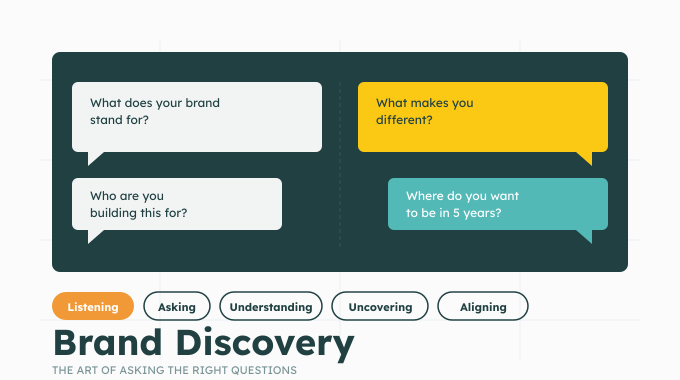
    The first thing to remember: you are having a conversation, not conducting an interview. This is an art you need to learn.

    From within that conversation, you will naturally surface the answers you need. Here are some questions to start from — more will come to you as the conversation unfolds:

    Discovery Questions
    Why do they actually want to do a brand refresh or rebranding?
    What has changed in the organisation?
    What is not working currently?
    Which brands do they admire personally and professionally — and why?
    Which person has inspired them most?
    How do they see their organisation growing in the next 3 to 5 years?
    If they had to describe their organisation in one line, what would it be?
    How do they see their competition — and what do they respect about it?
    What drives them?
    What change do they want to bring to their organisation?

    These answers will give you insights that become the foundation of your brand strategy.

    Have questions about brand discovery?
    Reach out — I am happy to help you think it through.
    rohit@narrative.asia
    Let’s make brand discovery meaningful.