Let’s take a moment to understand the creative journey of a memorable logo.
What is the primary purpose of a logo?
The primary purpose of a logo is identification. It is a symbol that customers use to recognise a brand. It is a visual representation of a company and serves as a recognisable emblem.
Why is a memorable logo important for a brand?
Ideally, you’d want consumers to instantly connect the look of a logo with the memory of what a company does — and more importantly, how it makes them feel. A memorable logo achieves exactly that.
How do you gather inspiration for a new logo design?
In this age of the Internet, online platforms such as Instagram, Pinterest and Behance help with inspiration because you can scan through multiple sample logos at the same time. As designers, we then put together the creative direction to establish a brand’s style.
What role does understanding the brand and its target audience play in logo design?
Understanding a brand and its target audience helps one make informed decisions about colour schemes, typography, visual elements, and the overall aesthetic of the brand. This further ensures engagement with the audience.
Can you list out the key elements worth considering during the conceptualisation phase?
Firstly, try and understand the brand personality. It is based on the brand archetype, which we identify and establish for the brand during the strategy phase. In branding, a good design should reflect the personality of the brand. Following that, we ideate and come up with initial design concepts.
What tools and software do you use for logo design?
We use Adobe Illustrator.
Can you describe your design process from sketching to finalising the logo?
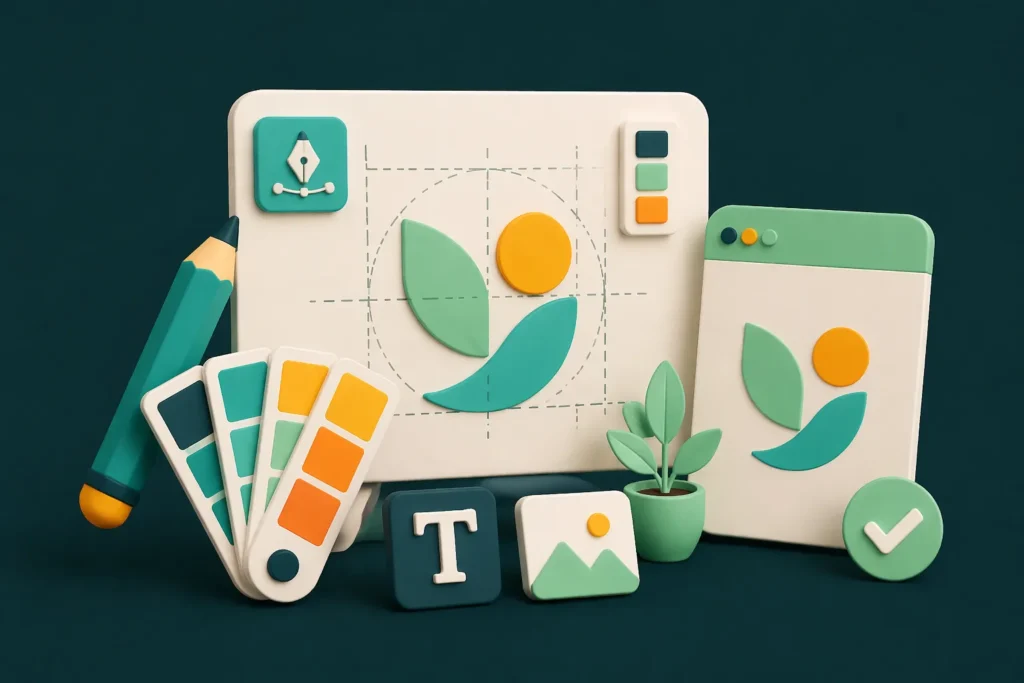
The first step is to design a logo that resonates with a brand’s target audience. It is important to understand who they are, what they need, and what they expect from the brand. The second step is to define the brand strategy or the core essence of a brand. The brand strategy will include vision, mission, values, purpose, personality, tone of voice and positioning. It is what makes the brand unique and different from the others in the market. We use a brand archetype to articulate the personality of a brand. We then gather references from online platforms and start integrating as many as three concepts + mood boards/visual directions to establish the brand style. This ensures that everyone is on the same page from the very start.
For instance, one of the brands that we are currently working on belongs to the boating industry and specialises in making boating parts. We captured the essence of its challenger personality by coming up with the concept of manta rays. The manta ray is a large fish known for its graceful gliding in the ocean. It symbolises the smoothness and ease of movement associated with the brand. For the logo, we’re using a stylised manta ray with sharp angular lines to convey a sense of rebellion and innovation. Manta rays are often found gliding in open waters and are known for their majestic tranquil presence.
Under moodboards, we cover aspects such as brand attributes, keywords, colour palette — explaining why we have used certain colours, typo, mood, feel and lifestyle.
Once we have established a visual direction for the project, we begin to apply that style into initial design concepts and start developing a logo. These are then presented in mock-ups so that the client can visualise the branding in a real-life setting. Once concept and direction are approved by the client, we start refining the logo, using the golden ratio. We also make necessary modifications to the type, keeping the brand personality in mind. We then create logo variations — primary logo, secondary logo, wordmark and favicon. Each type has its own advantages and disadvantages, depending upon the context, message and medium. We then present these to the client for final approval. Once approved, we export the ready-to-use files.
Tell us about the typography that you pick
There is no set rule about typography. It depends on the brand strategy. We choose a font based on the personality of the brand; then, customise and refine it to ensure that it’s authentic and unique.
Babrella Joseph
Creative Head, Narrative
Babrella pedals through life with a passion for cycling, a curiosity for exploration, and a flair for designing the most imaginative creations.