
AI & the branding process
Can one prompt create an entire brand strategy?
The two companies at the centre of the AI revolution built their brands with humans. That is the most useful data point in this debate.
Many posts claim you can create an entire brand system in one afternoon. The biggest AI companies spent months, and in one case years, building their strategies alongside brand consulting firms and their own internal teams. They did not rely on their own AI systems to do it.

You can, of course, prompt AI to create a brand strategy for your organization. But the output you will get won’t be unique to you. Your brand will end up looking and sounding identical to other companies in your industry.
Anthropic and OpenAI both invested their time and money to create unique positioning for their organizations. They knew the importance of having open conversations, finding deep purpose, and carving out a unique position. These are outcomes of real human dialogue.
Inside OpenAI and Anthropic’s branding
Anthropic spent two and a half years working with brand studio Geist to carve out their brand, from stealth mode through product launch, covering identity, messaging, site and product interface. OpenAI built theirs through a mix of internal strategy and design teams and specialist studios: AREA 17 on the earlier brand and website system, and for the 2025 rebrand, its in-house design team working with Studio Dumbar and the type foundry ABC Dinamo.
Even while operating in the same industry, both organizations occupy distinct positions defined by their strategy.
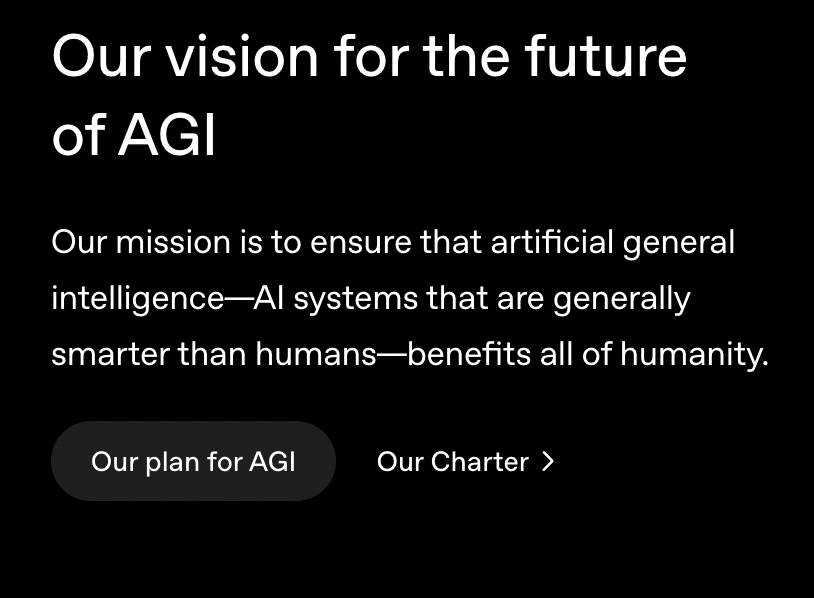
“AGI for all of humanity”
- Purpose frame
- AI as a public utility, not a premium product. The brand treats advanced models as infrastructure that should be abundant, affordable and easy to use.
- Audience logic
- If AGI is for everyone, the audience cannot be only enterprises or developers. Students, creators, small businesses, large companies, governments. That pushes the brand towards mass-market positioning and cultural visibility.
- Narrative arc
- Told in phases: research lab → product company → platform for abundant, resilient AI. The arc reinforces the idea that OpenAI is building the operating system for the AI era.
- Strategic position
- Category leadership. Define what “AI” means in the public mind and become the default layer other products sit on top of.
Win the category by owning the mission. If people believe AGI should benefit all of humanity, and OpenAI is associated with that mission, it becomes the natural choice even when competitors have similar capabilities.
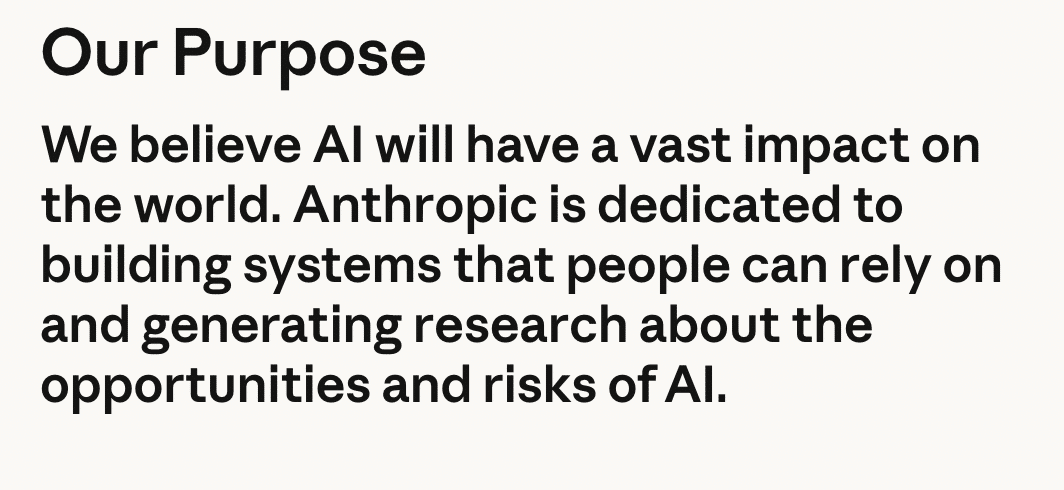
“AI you can rely on”
- Purpose frame
- AI as a high-stakes instrument that must be reliable and steerable. Safety is treated as the core product attribute, experienced while using the product.
- Audience logic
- If reliability is the promise, the audience cannot be “everyone”. It is the people and organizations with the most to lose from unpredictable AI: enterprises, governments, regulated industries, technical leaders running critical systems.
- Narrative arc
- Less about phases of growth, more about maturing a discipline: building safety science that scales with capability.
- Strategic position
- Niche dominance in trust-sensitive segments. Not the biggest AI brand; the most trusted option.
Win by owning trust. If institutions believe AI risk is real and that Anthropic is serious about managing it, it becomes the choice for high-stakes work even if other models are cheaper or more visible.
Both strategies show up clearly in the revenue mix.
of Anthropic’s revenue comes from API and enterprise contracts, the audience its safety-first positioning was built for.
of OpenAI’s revenue was enterprise entering 2026, the rest consumer subscriptions. Enterprise has since grown faster, and the company says the two lines have now crossed.
Analyst estimates and company commentary, not audited filings. Figures are directional and dated to 2026.
What exactly is brand strategy?
People are driven by emotions. We connect with brands that feel like they understand us. Brand strategy makes that connection possible.
It is not a document, a logo, or a set of vision and mission statements. It is a process to arrive at a clear and unique direction for your business. It provides frameworks and actionable deliverables that guide teams on how to achieve set goals.
A big part of this work is listening. The more you listen, the more clarity you get. You also need empathy, which AI still cannot offer. An AI tool cannot sit with a founder and understand why they are doing what they are doing. It cannot pick up on what they see as the real problem, their hesitations, and what they truly believe in. This is not only about research. It is also about human instincts and judgment.
When a business has ambitions for global expansion, acquisitions, or category leadership, you cannot rely on an AI-generated brand. This work involves stakeholder conversations, conflicting priorities, and multiple dynamics at play.
Strategy is where you make hard choices about who you are for, what you will not do, and how you will be distinct from everyone else.
What AI can do, and where it stops
It is important to give AI credit where credit is due. The tool can absolutely support the branding process. It is good at gathering market insights, mapping competitor positioning, and summarizing existing strategies. That lays the groundwork in a more structured way, which makes it faster to move to the next step.
- Collecting and summarizing market and category research
- Mapping competitor messaging and visual patterns
- Assisting in brainstorming ideas at various stages of the process
- Sit with a founder and understand why they built what they built
- Read hesitation, conflict and unstated priorities in a stakeholder room
- Decide what the organization will refuse to do
- Hold a position steady when every competitor is saying the same thing
B2B or B2C, your audience is always human. Both OpenAI and Anthropic prioritize human-centric visual identities to turn their positioning into an experience people trust and connect with. Achieving that level of strategic nuance requires human judgment that no prompt can replicate.
Humans are simply better at understanding other humans. We draw on our own lives, experiences and frustrations to sense what will resonate. Professionals take that intuition and make sure that even when your brand identity is connecting with people, it does not drift away from your organization’s vision. Maintaining that consistency and balance is what humans do best.
Case in point · OpenAIWarmth, engineered on purpose
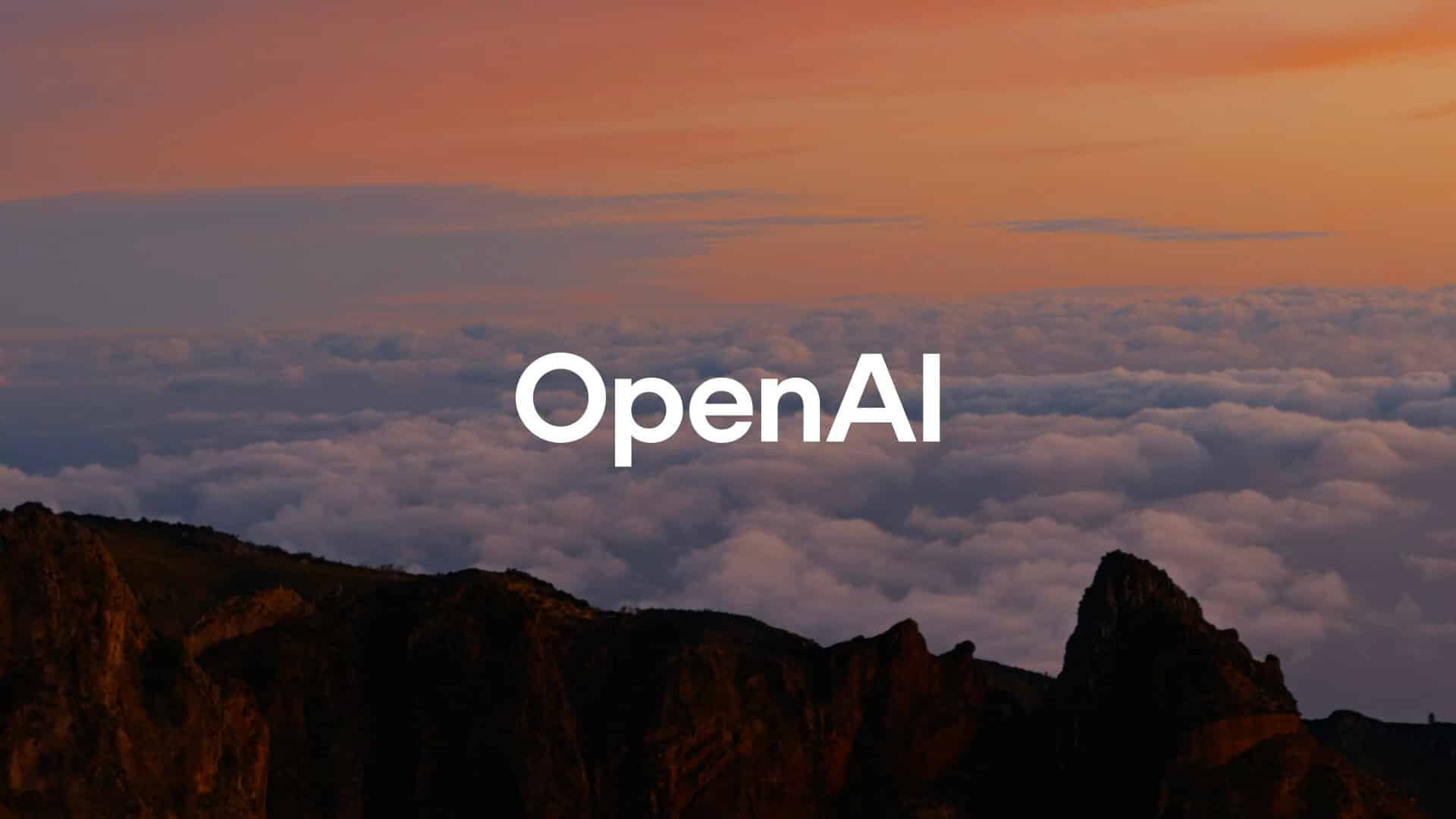
OpenAI’s 2025 rebrand was about balancing technological precision with human warmth. The palette leans on greys and blues inspired by open skies, horizons and vast spaces, colours that signal the scale and possibility the technology aims at.
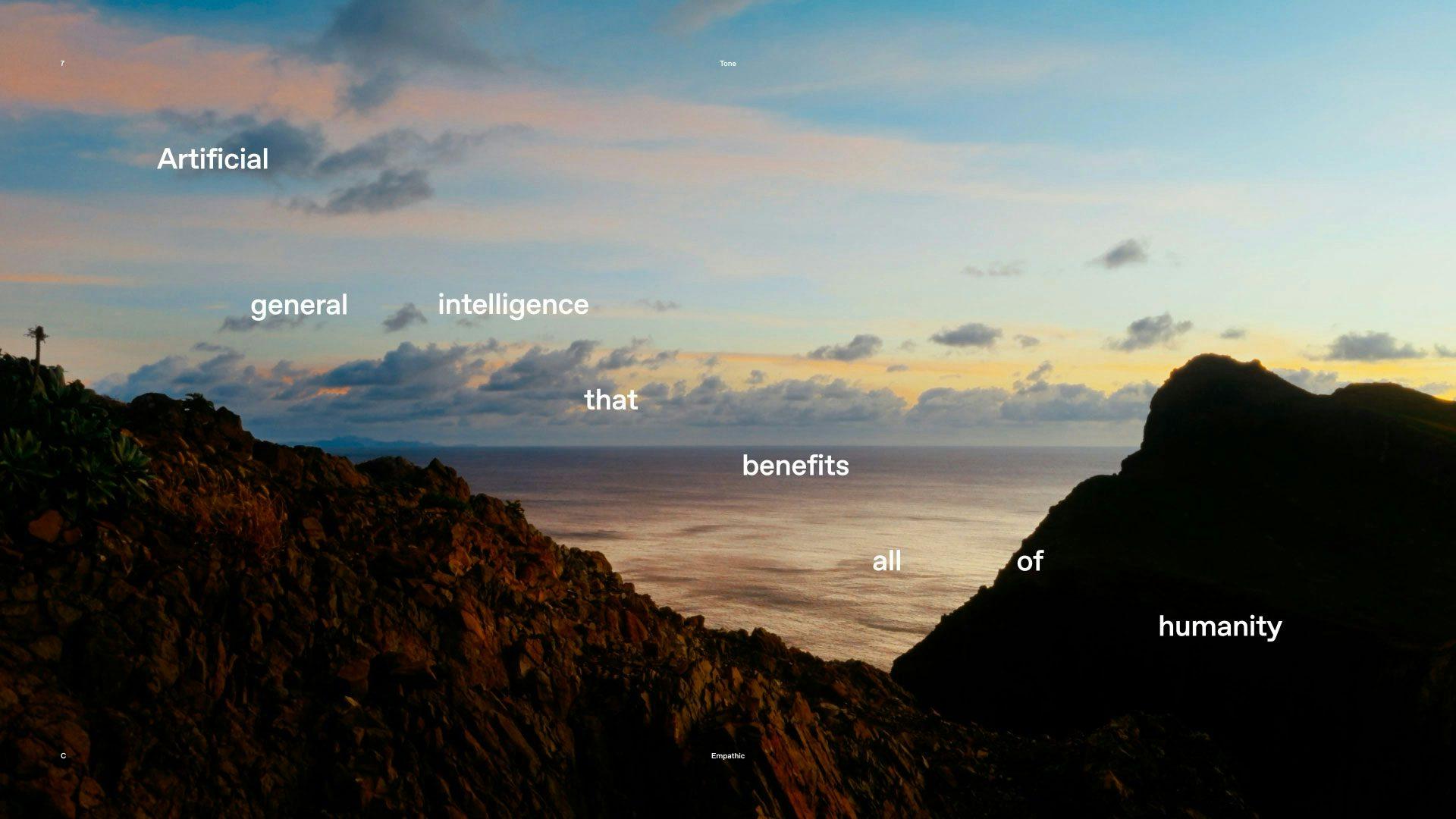
Their custom typeface, OpenAI Sans, mixes standard geometric shapes with softer curves so the brand never feels cold or distant.
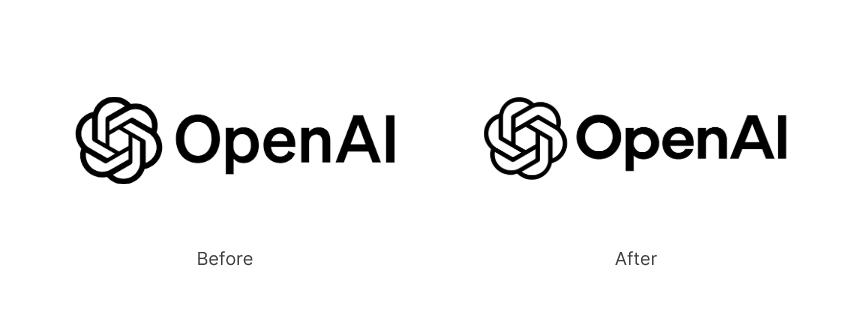
Even imperfection is deliberate. The “O” in the new wordmark is perfectly round on the outside but slightly uneven on the inside. That small irregularity gives the mark a human touch instead of a machine-stamped feel. The refined blossom logo follows the same logic, with a wider central opening and uniform line weights that make it feel more open and inviting.
These details might seem minor, but they shape how the brand is felt and perceived.
Case in point · AnthropicA deliberate step away from the category
Anthropic made a deliberate choice to step away from the blues and purples that dominate AI branding.
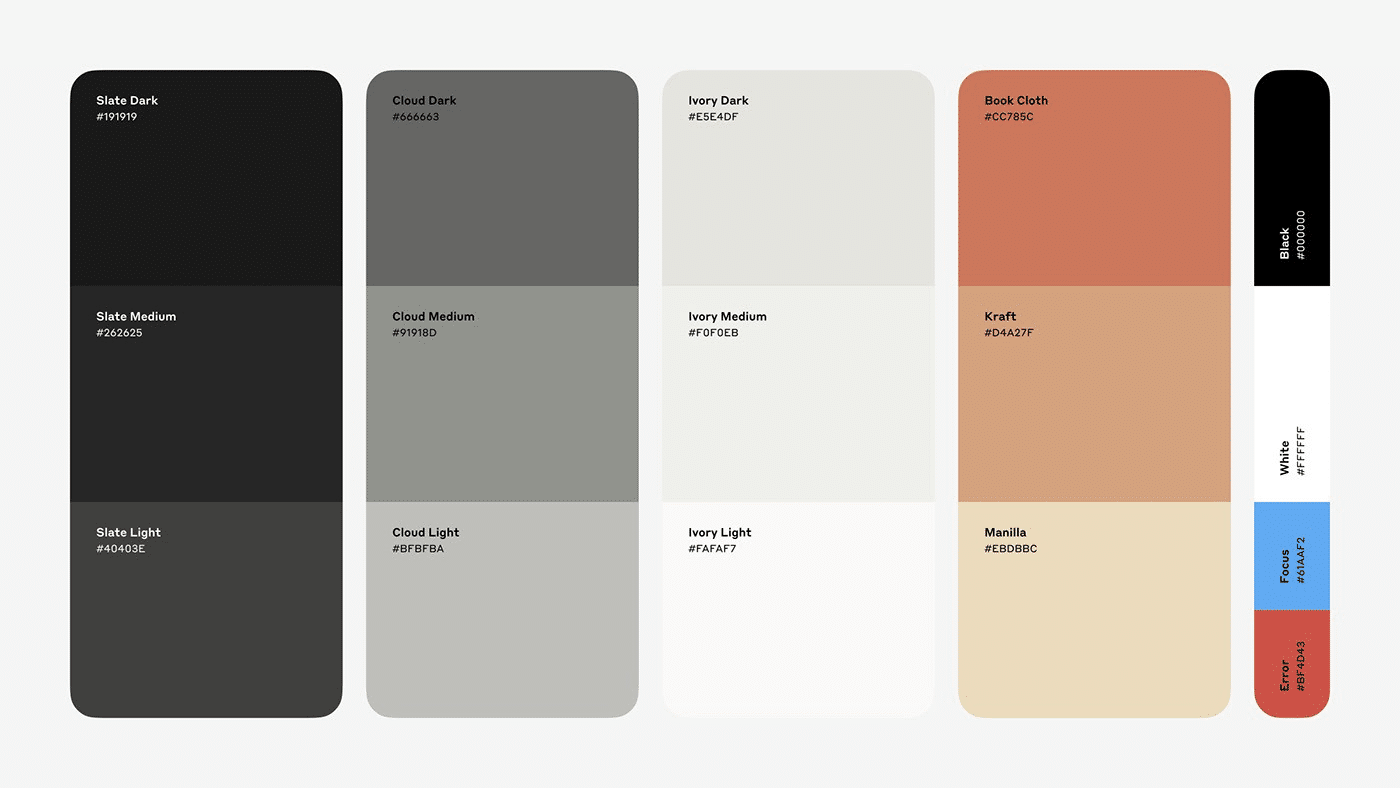
They chose a palette built on terracotta and cream. It avoids looking fast, futuristic, or like typical cutting-edge tech. Instead, the colours signal warmth, safety and human trust. These choices reflect the founding purpose around AI safety directly.
What stands out in their visual identity is how little they lean on a logomark. The primary logo is a wordmark, which is rare in an industry filled with abstract tech icons, and it gives the brand an editorial, minimal feel.
Their custom type family, Anthropic Type, draws inspiration from books and print media, its serif in particular. That makes the brand feel rooted in human knowledge rather than algorithmic output.
You see the same strategy in Claude’s design. The brand uses a terracotta starburst with a classic serif wordmark, suggesting ideas radiating outward. It communicates the trustworthiness and clarity that Anthropic wants to be known for.
The takeaway
You can technically prompt a brand into existence. You cannot prompt your way to a position.
I have sat down with founders for branding more times than I can count. Getting to the core of an organization takes days of deep conversations and real empathy. You have to understand and care about the business as much as the people who built it.
You can generate every visual asset on a checklist. But that will not give you a brand strategy that scales with your ambition. It will not give you original human thought, or a unique story that makes people connect with your organization.
If the companies at the very centre of the AI revolution needed humans to build their brands, what does that say about the rest of us?
Rohit Varma · Founder, Narrative · narrative.asia