• Before the Bell – Brand your SME  for a successful IPO

    Before the Bell – Brand your SME for a successful IPO

    MSME IPO Readiness Branding & Communication

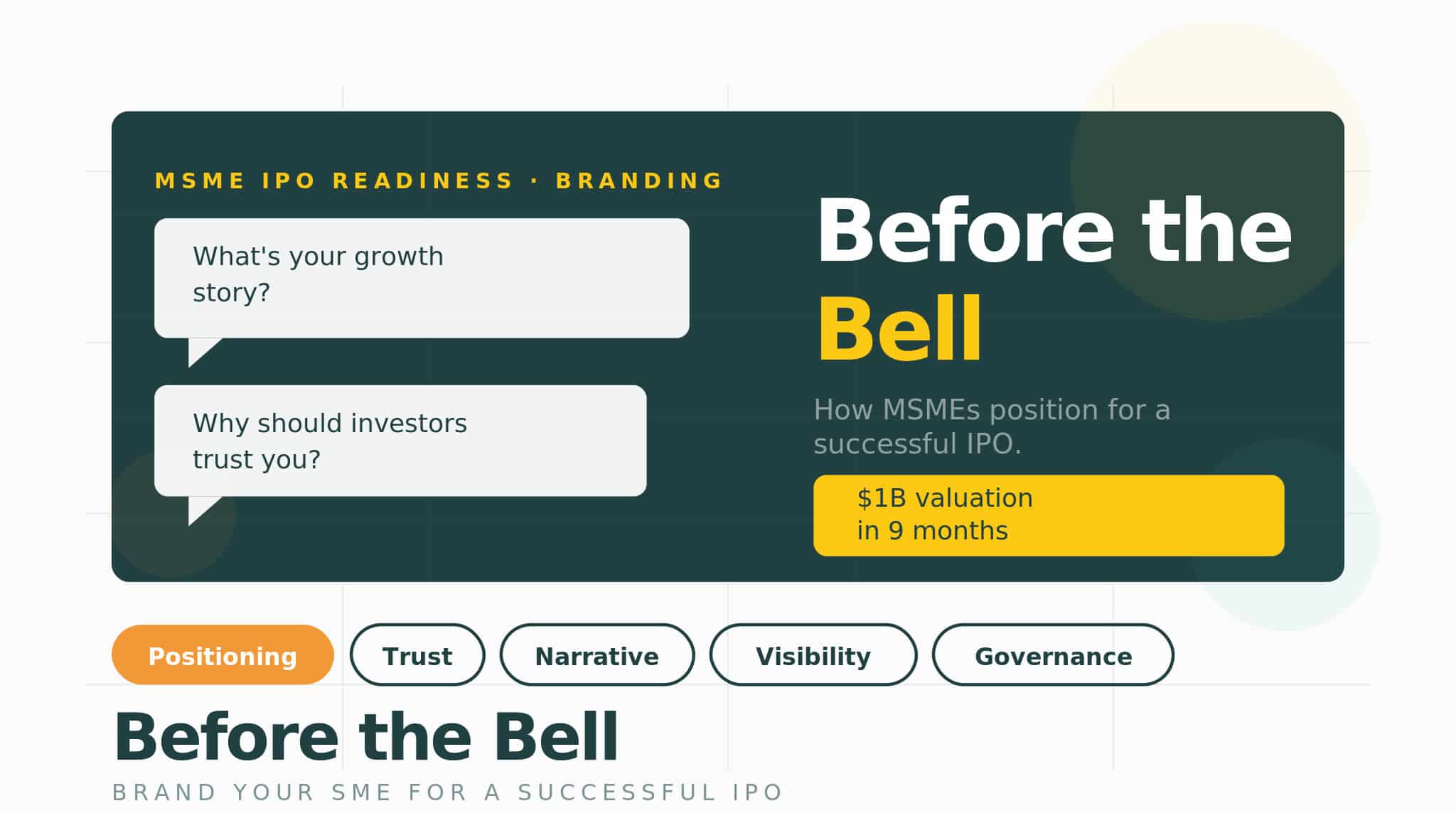
    Before the
    Bell

    Brand your SME organisation for a successful IPO — the story, the narrative, and the communication discipline behind the ones that lasted.

    Rohit 4 min read
    There was a time when IPOs were meant only for large organisations. Not anymore.

    In the last couple of years, we have seen many SME organisations going for an IPO — as many as one SME going public every working day.

    In 2025 alone, 268 SMEs listed on BSE SME and NSE Emerge, raising ₹12,000+ crore — the highest annual total the segment has ever seen.

    A quick note before the examples: “SME IPO” specifically means a listing on the BSE SME or NSE Emerge platform — a separate track from the mainboard, with its own rules. Most of the names below listed on the SME platform; a couple started SME-scale and went straight to the mainboard. Both prove the same point — just flagging which is which.

    Mainboard
    Kaynes Technology
    Listed Nov 2022 at ₹587. +32% on debut. Traded as high as ~10x issue price.
    Mainboard
    Syrma SGS Technology
    Listed 2022 at ₹220. +41% on debut. Traded as high as ~2.5x issue price.
    BSE SME
    EKI Energy Services
    Listed at ₹102, ₹96 Cr market cap. First BSE SME company to cross $1B valuation — in 9 months.
    BSE SME
    Shyam Dhani Industries
    Oversubscribed 900x+ in 2025. ~₹25,000 Cr in bids.
    BSE SME
    HOAC Foods India
    Oversubscribed ~1,994x.
    BSE SME
    Toss the Coin
    Oversubscribed ~1,025x.

    EKI Energy is the clearest, best-documented example: a dedicated branding and communications function inside the company, a CEO who showed up consistently in business media telling the story himself, and one sharp, repeatable claim — ranked the world’s No. 1 renewable energy carbon credit developer, two years running.

    That’s not one press release. That’s infrastructure.

    The others point the same direction, even where the trail is less publicly documented: a foundationally strong, unique and relatable narrative. Visibility. A consistent tone and look & feel. Communication that didn’t stop once the listing bell rang.

    Investors are driven by story — a true, relatable picture of the organisation. They respond to a clear growth story: what you make, why it matters, and where you’re headed.

    This is the reason communication strategy is central to IPO readiness. Institutional messaging should be built on credibility, management depth, and audited numbers. For retail investors, it should be built around narrative — what problem you solve, why your business is growing, and why now is the moment.

    What EKI Got Right
    A dedicated branding and communications function, not an outsourced afterthought.
    A CEO who was consistently visible in business media, telling the story himself.
    One sharp, repeatable claim: world’s No. 1 renewable energy carbon credit developer, 2022 and 2023.
    A narrative tied to a global trend — net-zero commitments — not a generic growth pitch.

    Most important for your IPO success. Advisors who work on these deals say this groundwork should start 18–24 months out, because it’s what drives your communication strategy through the run-up to listing and beyond. Treat branding as the foundation communication gets built on — not a checkbox before the roadshow.

    Good branding establishes your positioning, story, and messaging framework. A consistent public narrative around the business is very important — what the company stands for, its growth trajectory, and its role in its sector. Leadership visibility on professional social media platforms, trade magazines, industry bodies, and media plays a big role too. This humanises the organisation.

    It is not about one interview, one release, or one post. A big announcement is not enough — you have to be consistent with your communication and hold your position.

    Sharp listing-day gains followed by an equally sharp reversal within months were far more common in issues driven by one-off retail hype than in ones backed by a sustained, real narrative. RBI Bulletin, October 2025 — SME IPO study

    The more consistently you show up, the more traction you earn from investors — and the more of it sticks.

    Getting your SME ready for an IPO?
    Reach out — I am happy to help you think through the story.
    rohit@narrative.asia
    Branding isn’t a pre-IPO checkbox. It’s the difference between a listing-day headline and a company investors still believe in a year later.
  • Brand Design – How brand personality becomes something people can actually see

    Brand Design – How brand personality becomes something people can actually see

    Branding Series Stage 04 of 04

    Brand
    Design

    How brand personality becomes something people can actually see.

    Rohit 6 min read
    Recap
    This is the last stage of the series — where everything we’ve explored about the brand finally takes visual shape.

    We arrive at brand personality through conversations with stakeholders and industry and competitive research, while working alongside on brand strategy. All of this becomes raw material to work on the visual identity of the brand.

    Visual identity is the face of your brand. The personality we’ve built needs a visual for the audience to relate to.

    Brand design also helps in making sure of consistency in communication — colours, imagery, graphics, patterns, icons, everything that is visible to the audience.

    Good brand design follows a sequence — five steps that take a brand from feeling to form.

    Step 1
    Personality Slider
    Step 2
    Mood Board
    Step 3
    Logo Direction
    Step 4
    Logo Design
    Step 5
    Brand Usage Book

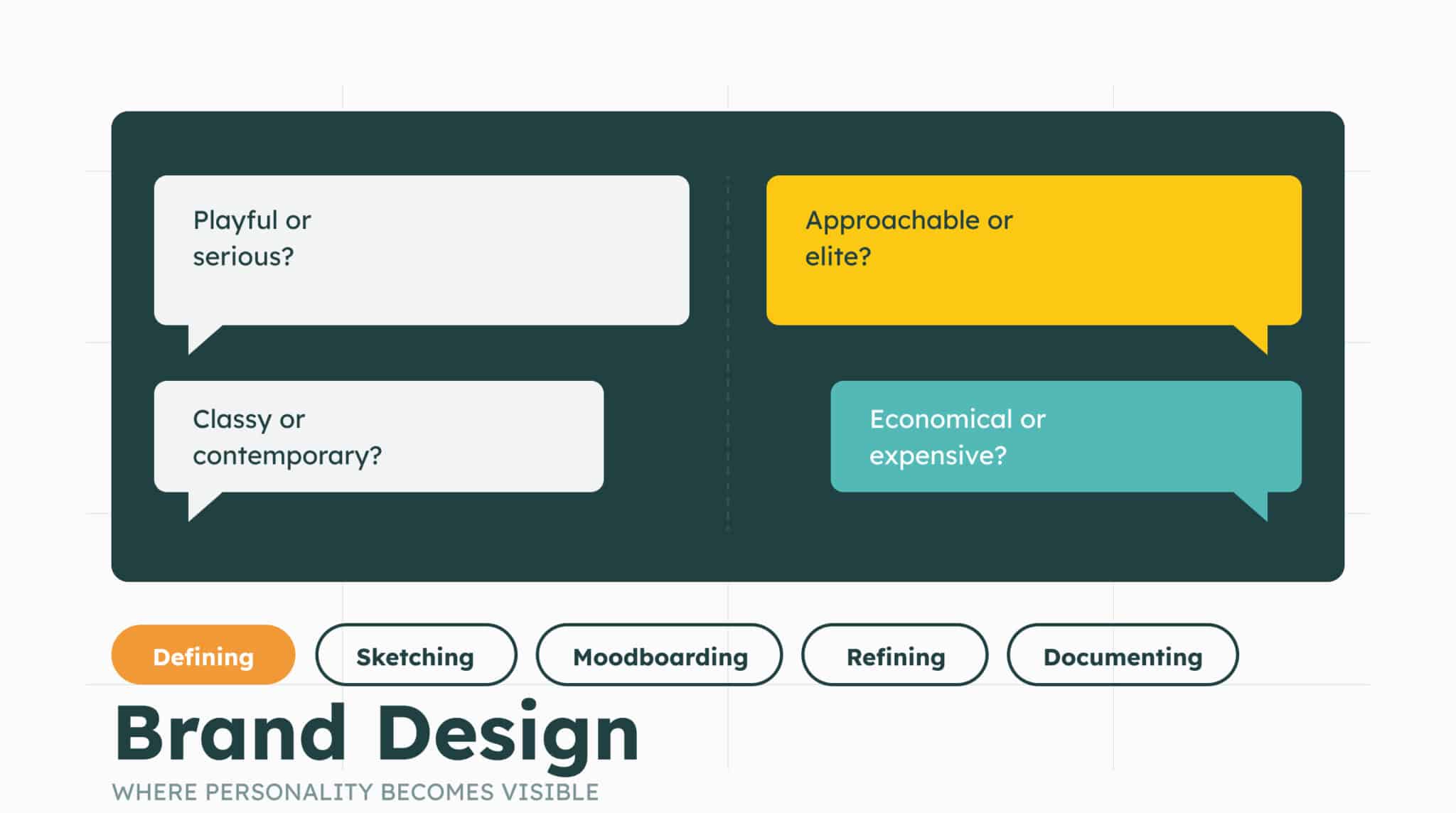
    Step 1 — Personality Slider. I believe this is a good starting point for brand visual identity design. It answers some very important questions that decide how your brand is going to look — is it playful or serious, unconventional or mainstream, approachable or elite? We plot every trait on a slider like this:

    Brand personality slider showing seven traits plotted on a spectrum

    Every point is checked on the slider, so we know exactly what kind of visual identity we’re creating.

    Step 2 — Mood Board. We have a direction now. It’s time to work on a couple of moodboards to arrive at the look and feel. A moodboard is a collage, and it contains font system, colour scheme, indicative photography, and graphics or textures.

    Work on as many moodboards as you want, but don’t present more than 3 options to the client — they tend to get confused. Connect every moodboard back to the personality we’ve already worked on.

    Step 3 — Logo Direction. Basis the moodboards, we now work on logo direction. Clients may not be able to visualise the logo unit with the moodboards alone, hence it is good to work on logo directions — each moodboard gets one. Now the client is able to see how their logo will look. It’s good to show them some mock-ups so they can visualise it better.

    Step 4 — Logo Design. Once the client has taken a decision on one logo direction, it’s time to get into the details — logo construction, golden ratio, typeface clean-up, logo colours, refinement of the logo mark, and the logo suite (primary logo, secondary logo, logo mark, word mark) etc.

    Do print the logo in different sizes and on different papers too, to see the output. What we see on screen versus print can be very different.

    Step 5 — Brand Usage Book. The brand book is the holy bible. It is important to document each and everything that may come to use when someone is building communication for the brand. One must show examples, so it’s easy for anyone to understand and implement.

    A brand isn’t truly built until it’s seen, felt and remembered — that’s exactly what good design does.

    Have questions about brand design?
    Reach out — I am happy to help you think it through.

    rohit@narrative.asia
    Let’s give your brand a face worth remembering.
  • Brand Strategy – What it means, what it involves, and how to create one that works in reality

    Brand Strategy – What it means, what it involves, and how to create one that works in reality

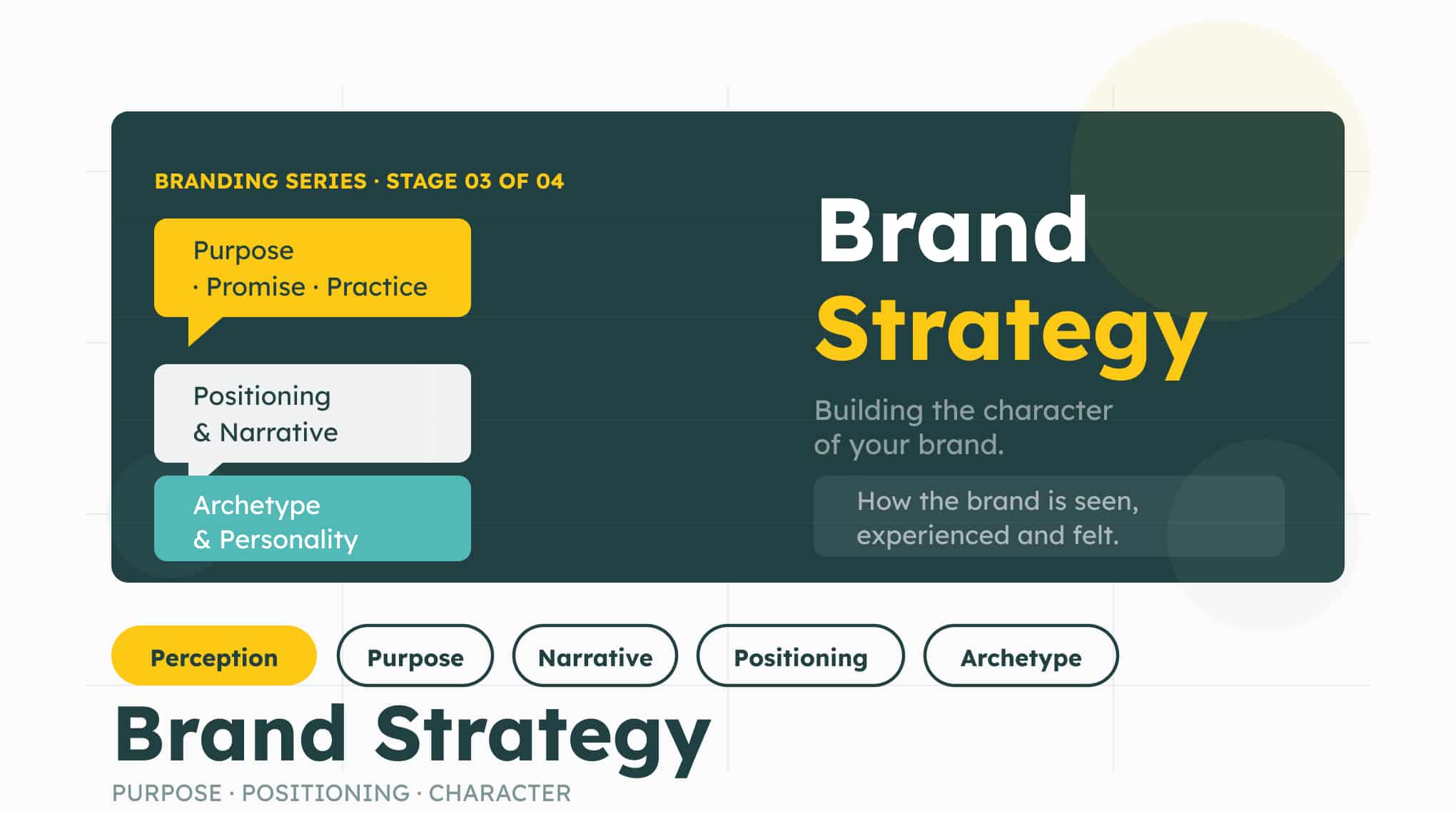
    Branding Series Stage 03 of 04

    Brand
    Strategy

    What it means, what it involves, and how to create one that works in reality — not just on paper.

    Rohit 6 min read
    Recap
    Every brand wants to be unique — unique in how it is seen, experienced and felt by the customer. Brand strategy is how you make that happen.

    Brand strategy is where we create — or fix — the important elements of a brand to build a character. Almost a human character. It gives the brand a purpose, a voice, a personality and a position in the world.

    It is the foundation that everything else is built on. Visual identity, communication, campaigns — all of it flows from here.

    Brand strategy looks at many interconnected elements — each one contributing to the whole. Here are the core ones:

    Element 01
    Perception Shift
    How the brand is seen today — and how it wants to be seen in the future.
    Element 02
    Purpose
    The problem you are solving. Your reason for existence.
    Element 03
    Promise
    The commitment you make to your customers — and stand by, every day.
    Element 04
    Practice
    Action. Align the internal team so they live the brand in everything they do.
    Element 05
    Narrative
    Your story — the one you want to tell to the world.
    Element 06
    Vision & Mission
    Vision is your long-term goal. Mission is the roadmap to get there.
    Element 07
    Positioning
    How differently you want to stand against competition — your unique space.
    Element 08
    Articulation
    The tagline. In 3–4 words, communicate a larger purpose — emotional or rational.
    Element 09
    Archetype
    The character framework that defines who the brand is at its core.
    Element 10
    Personality
    The human traits and character of the brand.
    Element 11
    Expression
    How the brand is seen, experienced and felt across every touchpoint.
    These elements together create the complete brand strategy. It is complex, it takes time — and it is absolutely worth it.

    “How” is always the difficult question. There is no one right way — but there is a starting point.

    1
    Start with your data
    Everything you gathered in Discovery and Research is your raw material. Data is just data — until you find the insights hiding inside it.
    2
    Find the insights
    Make sense of everything you have collected. Look for patterns, contradictions, and moments of truth. Insights are your starting point for strategy.
    3
    Write answers for every element
    Use the insights and start writing. Question everything until you are convinced. The more you do this, the sharper you become.
    4
    Learn by doing
    Case studies help. But there is no substitute for getting your hands dirty. That is how you build the craft.

    The brand story is not just written on paper — it needs to be told to the audience at every given opportunity.

    Have questions about brand strategy?
    Reach out — I am happy to answer.

    rohit@narrative.asia
    Let’s build a strategy that means something.
  • Why Research Matters, What to Look For, and How to Stay Focused—Without Getting Lost

    Why Research Matters, What to Look For, and How to Stay Focused—Without Getting Lost

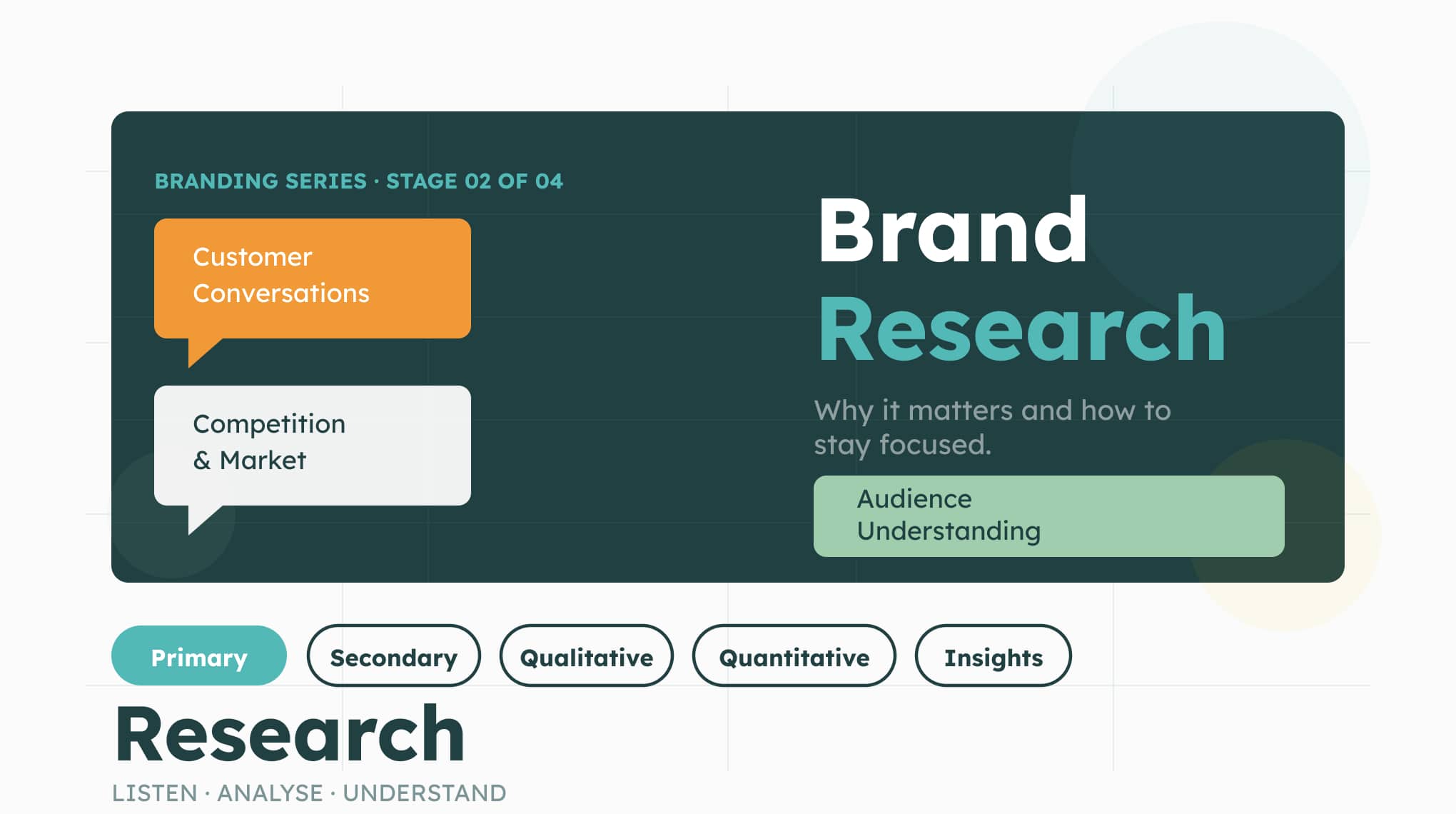
    Branding Series Stage 02 of 04

    Brand
    Research

    Why research matters, what to look for, and how to stay focused — without getting lost.

    Rohit 6 min read

    Narrative Asia founder, brand strategist, TEDx speaker, Rohit Varma brings over 25 years of experience in building powerful narratives that connect brands, people, and culture through meaningful storytelling.

    Recap In the previous blog, I wrote about Brand Discovery — Stage 01: what it is, why it matters, and how to do it effectively through stakeholder conversations.
    Often we get lost when we start researching — and it happens because we are not clear on what we are actually looking for. The key is to define your outcome before you begin.

    We need insights — and research is the only way to get them. On their own, neither discovery nor research is enough. Together, they give you a complete picture of the audience, the competition, and the industry.

    Research also helps you understand the current perception of the brand — critical for rebranding or a brand refresh — or to identify the narrative you want to create for a new brand.

    Discovery covered stakeholder conversations. Now it is time to talk to customers — the people who actually experience the brand. Here is what you want to understand from them:

    Customer Questions
    Why are they working with this particular brand?
    How do they see this brand?
    What do they like or dislike about this brand?
    What do they expect from this brand?
    If given a choice, what would they change?
    What is their perception of the product or service?

    This is where most people get lost — jumping into competition and industry research without a clear destination. Before you start, define the outcome you are working towards. Once you know what you need, the research stays focused.

    Secondary research is not about consuming everything. It is about finding the specific signals that will inform your brand strategy.
    Secondary Research
    Competition
    Brand story
    Articulation
    Vision & mission
    Brand campaigns
    Tone of voice
    Logo & architecture
    Archetype
    Secondary Research
    Industry
    Growth pillars
    Colours associated with the industry
    Innovations
    Industry size
    Evolution

    These are not exhaustive lists — they are starting points. The combination of Discovery and Research will give you enough insights to begin building your brand strategy.

    Have questions about brand research?
    I am happy to help. Just drop me a mail.

    rohit@narrative.asia
    Let’s make research purposeful.
  • Brand Discovery – The Art of Asking the Right Questions

    Brand Discovery – The Art of Asking the Right Questions

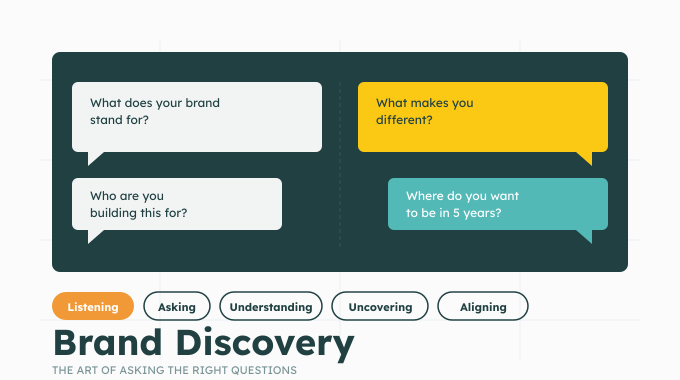
    Branding Series Stage 01 of 04

    Brand
    Discovery

    What it means, why it matters, and how to do it — without the jargon.

    Rohit 5 min read

    Narrative Asia founder, brand strategist, TEDx speaker, Rohit Varma brings over 25 years of experience in building powerful narratives that connect brands, people, and culture through meaningful storytelling.

    I will avoid using jargon as much as possible and make this practical for anyone to use.

    Discovery is the process of gathering relevant information by having conversations with founders, CEOs, Managing Directors — basically the leadership team. Some of them will be decision makers, some will be influencers, but their opinion matters.

    This is not a briefing call. It is a deep, open conversation — and that distinction changes everything.

    The information you are looking for does not exist in a briefing document, on the website, or in any published content. It simply does not exist yet. You can only surface it through conversation.

    Discovery helps across all kinds of branding assignments — new brand development, rebranding, or brand refresh. It is the most important stage to create a brand strategy that works in reality, not just on paper.

    Think and list every question that will make a difference when you work on brand strategy. To understand what you need to uncover, here are the core elements of brand strategy you are ultimately working towards:

    Brand Core
    Purpose, promise and practice
    Brand Thought
    The story
    Brand Articulation
    The tagline
    Brand Personality
    The character
    Brand Expression
    How you want to be felt, seen and heard
    Brand Positioning
    Your unique space

    This is not a comprehensive list — it is a starting point to help you decide what information you need from stakeholders.

    The first thing to remember: you are having a conversation, not conducting an interview. This is an art you need to learn.

    From within that conversation, you will naturally surface the answers you need. Here are some questions to start from — more will come to you as the conversation unfolds:

    Discovery Questions
    Why do they actually want to do a brand refresh or rebranding?
    What has changed in the organisation?
    What is not working currently?
    Which brands do they admire personally and professionally — and why?
    Which person has inspired them most?
    How do they see their organisation growing in the next 3 to 5 years?
    If they had to describe their organisation in one line, what would it be?
    How do they see their competition — and what do they respect about it?
    What drives them?
    What change do they want to bring to their organisation?

    These answers will give you insights that become the foundation of your brand strategy.

    Have questions about brand discovery?
    Reach out — I am happy to help you think it through.

    rohit@narrative.asia
    Let’s make brand discovery meaningful.
  • Why Humour Is Becoming the New Luxury in Advertising

    Why Humour Is Becoming the New Luxury in Advertising

    For decades, the formula for “Premium Advertising” was predictable: cinematic visuals, serious voiceovers, and an untouchable sense of distance.

    The logic was that to be respected, a brand had to be stoic.

    But in 2025, the definition of status has shifted.

    We are entering an era where humour in advertising is replacing exclusivity as the ultimate signal of confidence. In a market flooded with polished, AI-generated content, the ability to be human and specifically, to be funny is the new premium asset.

    Why 91% of Consumers Are Waiting for You to Make them Laugh

    This isn’t just a creative feeling; it is a statistical reality.

    According to the Oracle “Happiness Report” (2022), a massive 91% of consumers globally prefer brands to be funny.

    However, there is a glaring gap in the market: the same report notes that 95% of business leaders fear using humour in their interactions.

    The data for India is even more striking. The report highlights that 93% of Indian consumers want brands to make them smile, yet most Indian brands still default to “safe,” corporate messaging.Furthermore, Cannes Lions 2024 officially introduced a dedicated “Humour” category for the first time in years, signalling a global industry pivot.

    The message from the data is clear: Being serious isn’t “safe” anymore, it’s a risk.

    The “Status Shift”: Why Seriousness Is Now a Liability

    Why is this happening now?

    Psychologically, humour is a signal of security. A brand that takes itself too seriously often appears insecure or defensive.

    Conversely, a brand that can crack a joke at its own expense signals high status.
    It says, “We are so good at what we do, we don’t need to hide behind a suit.”

    This is why we see luxury giants like Balenciaga or tech leaders like Spotify leaning into meme culture. They understand that emotional branding strategy is most effective when it bridges the gap between the brand and the user, rather than widening it.

    The Indian Playbook: When “Witty” Beats “Wealthy”

    India is leading this charge with witty ad campaigns that prioritize relatability over reverence.

    5 Star’sDo Nothing“: Instead of selling “energy” or “success” (like every other chocolate brand), they positioned “laziness” as a luxury.
    It worked because it validated a cultural mood.

    CRED: As a fintech player, they deal with serious money. By old logic, they should be boring. Yet, their campaign featuring an angry Rahul Dravid (“Indiranagar ka Gunda”) built more trust than any serious manifesto could.
    It proved that you can handle sensitive data and still have a personality.

    These brand personality examples show that Indian audiences are sophisticated. They don’t need you to be “professional” to trust you; they need you to be authentic.

    How to Use Humour Without Being “Cringe”

    The fear of “getting it wrong” is valid. So, how do you implement an authentic brand voice without sounding like a dad trying to be cool?

    Punch Up, or Punch Yourself: Never make fun of the customer. Either make fun of a shared annoyance (e.g., traffic, slow wifi) or make fun of yourself.
    Self-deprecation is the safest form of corporate humour.

    Use “Insider” Knowledge: The best jokes come from specific truths. If you are a B2B software company, don’t make a generic joke. Make a joke about Excel spreadsheets crashing.

    It signals that you really know your customer’s pain.

    Start Small: You don’t need a Super Bowl ad. Start with your micro-copy. A witty 404 error page or a playful push notification is a low-risk way to test your brand’s comedic voice.

    The Narrative Asia Perspective: Strategic Wit

    At Narrative Asia, we believe that humour is not a strategy; it is a delivery mechanism.

    You don’t decide to “be funny” just to get likes. You use humour to deliver a truth that would be too boring to say seriously.

    If you write a 1000-word blog about your product features, no one reads it. If you make a meme about the problem your product solves, thousands see it.

    We help brands find that specific frequency of wit, one that doesn’t lower your value, but raises your relatability. Because in 2025, if you can’t make them smile, you probably can’t make them buy.

  • Memefluence: How Internet Culture Now Shapes Creative Strategy

    Memefluence: How Internet Culture Now Shapes Creative Strategy

    The CMO vs. The Admin

    Imagine this scenario: A global brand spends six months and ₹50 Lakhs developing a polished TVC. They focus-group every frame. They launch it. It gets a polite nod from the industry.

    Meanwhile, a 22-year-old social media admin at a rival startup spends 10 minutes making a meme on Canva about a trending topic. It gets 50,000 shares, reaches millions, and dominates the conversation for 48 hours.

    This is Memefluence and the new power of internet culture in marketing.

    For a long time, traditional agencies dismissed memes as “filler content.” But in 2025, viral creative strategy isn’t just a tactic; it is the primary language of the consumer. If your brand doesn’t speak it, you aren’t just boring, you are functionally illiterate in the modern marketplace.

    The Shift From “Interrupting” Culture to “Becoming” Culture

    Advertising used to be about interruption. You watched a cricket match, and a brand interrupted it to sell you soap.

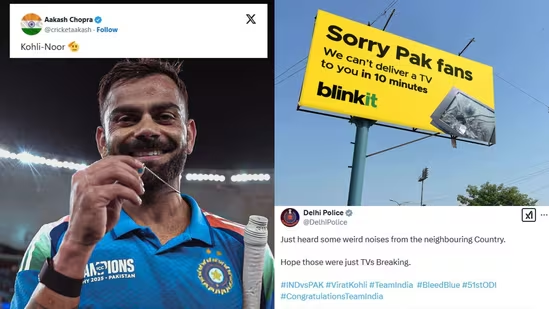
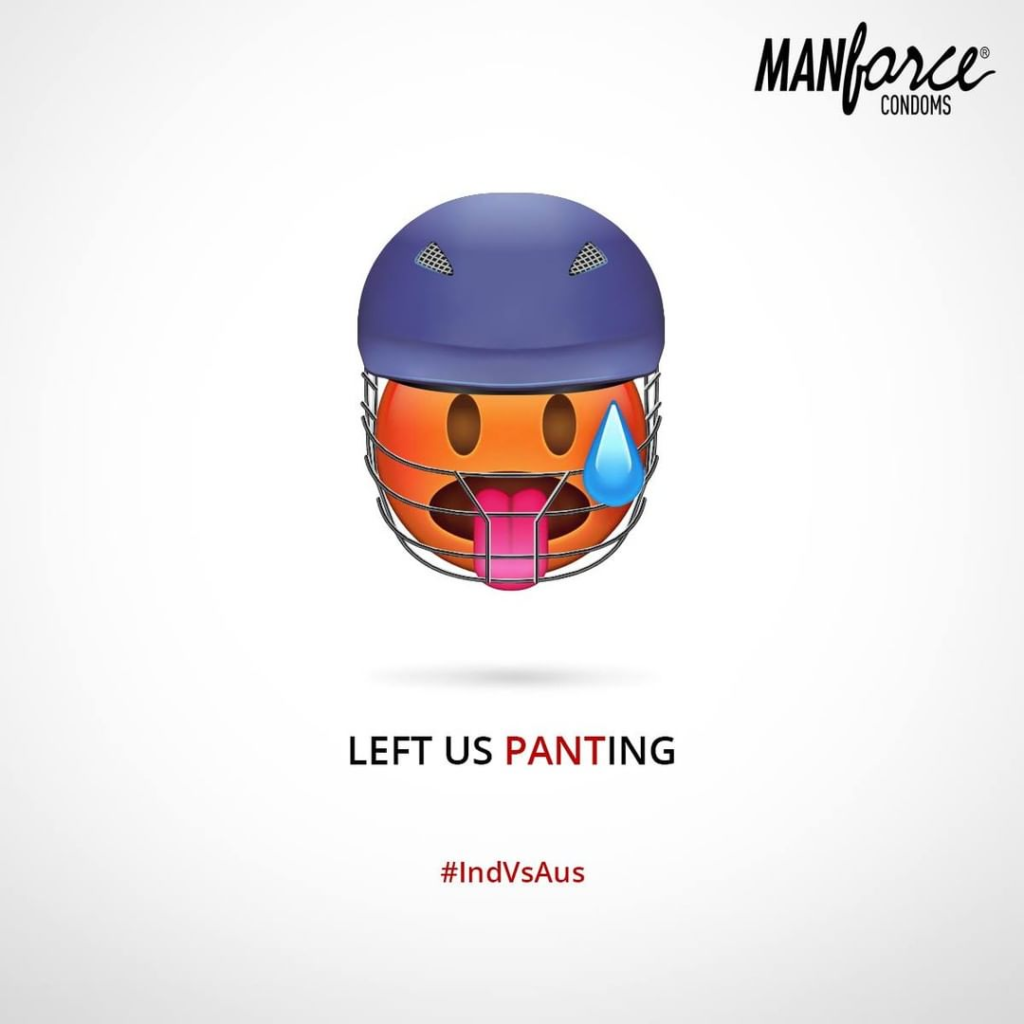
    Today, moment marketing trends thrive because the audience blocks ads, but they share memes. Why? Because memes are “inside jokes” at scale. When a brand successfully participates in a meme, they aren’t selling; they are signaling: “We get it. We are one of you.”

    This shift requires a fundamental change in how we view “Brand Guidelines.” The brands winning today are the ones willing to loosen their tie and play in the chaotic sandbox of the internet.

    The ROI of Relatability: Why Lo-Fi Beats Hi-Fi

    There is a growing demand for “Lo-Fi” content.

    A perfectly lit studio shot feels like a sales pitch. A grainy, zoomed-in screenshot with Impact font feels like a conversation.

    This is the core of a modern meme marketing strategy India.
    Consumers trust content that feels “made by a human,” not “approved by a committee.”

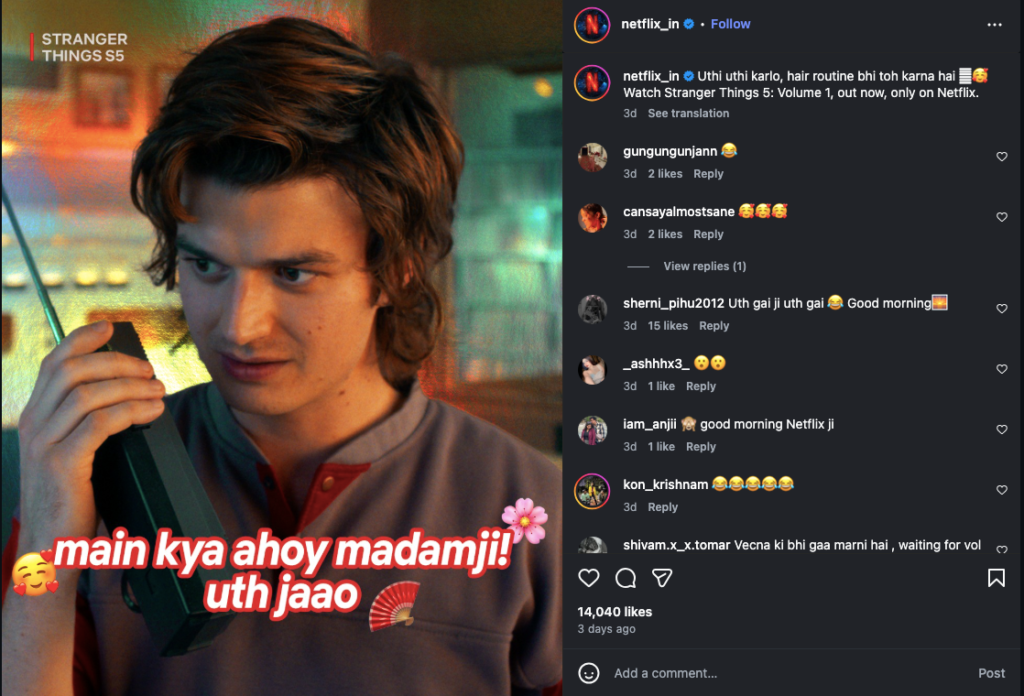
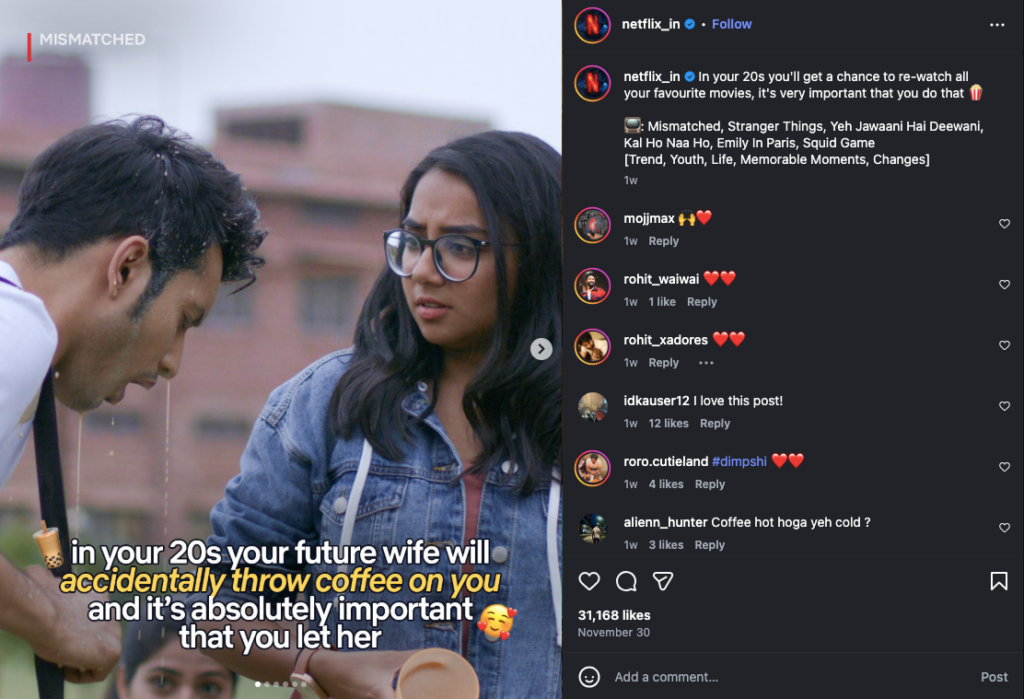
    Netflix India is a master of this. They don’t just post trailers; they post out-of-context screenshots that act as reaction images. They turn their product into a vocabulary.

    By prioritizing brand relevance in pop culture over visual perfection, brands can achieve an ROI that traditional media buying simply cannot match: the cost of entry is zero, but the payoff is cultural dominance.

    The Indian Context: When Bollywood Meets the Algorithm

    India is the meme capital of the world. Our internet culture in marketing is a chaotic, beautiful mix of Bollywood dialogues, cricket heartbreak, and localized slang.

    For a creative agency, this presents a unique challenge. You cannot simply translate a western trend. A “skibidi toilet” reference might fly over the heads of a Tier-2 Indian audience, but a “So beautiful, so elegant, just looking like a wow” reference (even if dated now) instantly bridges the gap.

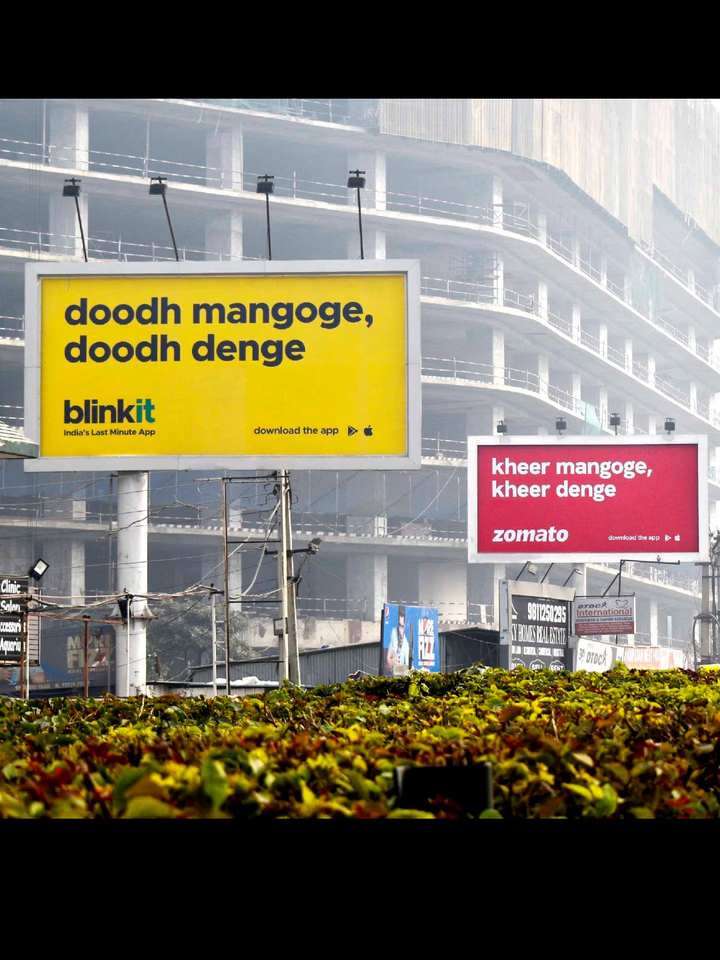
    Moment marketing trends in India move at lightning speed. Remember the Blinkit x Zomato billboard collaboration (“Doodh mangoge…” “Kheer denge”)? It was simple, text-based, and culturally rooted. It went viral not because of the design, but because of the context. It turned a billboard into a meme format that every other brand immediately copied.

    The Rules of Engagement: How to Avoid the “Cringe”

    The danger of meme marketing is the “Steve Buscemi Effect”—the older gentleman trying to dress like a teenager (“How do you do, fellow kids?”).

    To navigate this, we follow three rules:

    Speed is Safety: If you are three days late to a trend, do not post it. An old meme is worse than no meme.

    Respect the Format: Do not force your product where it doesn’t fit. If the meme is about “emotional damage,” don’t try to twist it into selling insurance unless the link is genius.

    Punch Up, Never Down: Internet culture rewards self-deprecation. Duolingo is famous for threatening its users. It works because the brand is the “villain” of the joke, not the user.

    From Factory to Newsroom

    To survive in the meme economy, brands must change their internal wiring.

    Traditional marketing operates like a Factory: linear, slow, and obsessed with perfection. (Brief → Strategy → Copy → Design → Approval → Publish).

    Modern marketing must operate like a Newsroom: fast, reactive, and obsessed with timing.

    You cannot wait for three rounds of legal approval for a moment marketing post. By the time it is approved, the moment is gone. We need to build frameworks that allow for “safe agility” giving creative teams the freedom to react to culture in real-time within pre-agreed boundaries. Perfection is the enemy of relevance.

    Conclusion

    The internet is a party. Most brands stand in the corner handing out business cards. The brands that win are the ones on the dance floor, learning the steps as they go.

    At Narrative, this is exactly how we approach culture-led creative thinking. We help brands stop broadcasting and start participating—by reading the room, reacting in real time, and showing up with ideas that feel native to the internet, not imposed on it.

    Is your brand ready to stop broadcasting and start participating?

  • Culture-First Branding: Why Tone Matters

    Culture-First Branding: Why Tone Matters

    The IndiGo Paradox: Saying “Sorry” Isn’t Enough

    We are currently witnessing a masterclass in how not to handle brand tone with the unfolding IndiGo airlines crisis.

    When hundreds of flights were cancelled and passengers were stranded at airports, the airline issued a full-page “We Are Sorry” advertisement, in the newspaper, the words were correct. But in reality, the apology fell flat. Why?

    Because the tone was wrong. The polished, corporate “broadcast” style of the ad clashed violently with the raw, chaotic emotion of the customers sleeping on airport floors.

    It felt scripted rather than sincere. It proved that in 2025, you cannot copy-paste empathy.

    This is the “Uncanny Valley” of branding: when a brand says the right thing but feels completely disconnected from the human reality of the moment.

    In a digital ecosystem defined by AI-generated noise, authentic brand identity is the only signal that cuts through.

    The Identity Crisis: Voice vs. Tone

    Many marketing leaders confuse “voice” and “tone,” treating them as synonyms. If you want to avoid an IndiGo-style backlash, you must understand the distinction.

    Think of it like two iconic Indian brands:

    Brand Voice is your personality. Tata has a voice of “Service and Trust”
    It is steady and unchanging.

    Brand Tone is your mood. It adapts to the situation. Even CRED, known for its witty and sarcastic voice, shifts its tone to be precise and serious when discussing payment security.

    A strong brand voice vs tone strategy ensures that while your core personality remains steady, your delivery flexes to meet the emotional needs of your audience.

    Build a Culture-First Branding Strategy

    Old-school branding was about “positioning.” New-school branding is about “participation.”

    Culture-first branding means stopping the monologue about your product features and entering the dialogue about what your customers actually care about.

    For Example: Look at Zomato.

    They don’t just sell food delivery; they participate in the national mood.
    Whether it’s a notification about “Chai” during a rainy cricket match or a meme about election results, they speak the language of pop culture.
    They have permission to speak because they aren’t just selling to the culture; they are part of it.

    Cultural relevance in marketing isn’t about chasing trends; it’s about aligning your values with the shifting behaviors of society.

    When you speak with culture, rather than at it, you move from being a vendor to being a partner.

    Master the Art of Localized Nuance

    The internet is global, but trust is local. A truly localized branding strategy goes beyond Google Translate. It understands that a “bold” tone in Mumbai might be perceived as aggressive in Lucknow.

    For Example: Spotify India.

    Spotify didn’t just translate their app; they localized their context. Their “Wrapped” campaigns and playlists don’t just say “Bollywood Hits.”

    They use the specific slang of a Delhi college campus (“Vibe Check”) versus the poetic cadence appreciated in Kolkata.

    They understand that India is not one market, but fifty markets stitched together.

    To resonate, you must adapt your idioms, your humor, and your cultural references. You need to speak the language of the street, not just the language of the dictionary.

    Operationalize Your Brand Messaging Framework

    How do you scale authenticity? How do you ensure that your junior copywriter, your customer support agent, and your CEO all sound like the same brand?

    You need a rigorous brand messaging framework.

    For Example: Amul.

    For decades, Amul has maintained a consistent voice as witty, topical, and innocent. Whether it was a billboard in 1985 or an Instagram post in 2025, the voice is identical.

    This is only possible because they have a strict framework that defines exactly how the “Amul Girl” reacts to news.
    Her humour is never at someone’s expense; they are playful, witty, and culturally aware.

    Without this framework, your brand is just a collection of random opinions. With it, your brand tone of voice strategy becomes a scalable asset that builds equity with every interaction.

    Storytelling Is a Behaviour

    We often tell our clients: “People don’t read; they recognize.”

    When a customer sees your email notification, they should know it’s you before they even look at the sender name.

    That recognition comes from a commitment to an authentic brand identity.

    AI can write sentences, but it cannot write culture. It cannot replicate the specific warmth of a founder’s story or the nuanced humor that a specific community enjoys.

    Use AI to structure your thoughts, but use your human teams to infuse the soul. The brands that win in the next era will be the ones that aren’t afraid to sound human—flawed, funny, empathetic, and real.

    Conclusion

    Are you ready to stop shouting and start communicating?

    If you stripped away your logo, your colours, and your fonts, would your customers still recognize you? If the answer is no, it’s time to look at your tone

  • The New Rules of Brand Trust in a Post-AI World

    The New Rules of Brand Trust in a Post-AI World

    We are living through a content explosion. In just the last two years, Generative AI has fundamentally changed the internet. It has lowered the barrier to creation so drastically that the web is now flooded with infinite text, infinite images, and infinite video.

    But in economics, when supply becomes infinite, value creates scarcity. And right now, the scarcest resource on the internet isn’t attention—it is trust.

    For modern businesses, building brand trust in the age of AI is no longer just about having a quality product or a clever logo. It is about proving to your audience that you are, in fact, real. The brands that win in 2025 won’t be the ones using the most advanced algorithms; they will be the ones that effectively bridge the gap between technology and humanity.

    The “Uncanny Valley” of Branding

    Why is trust eroding? It comes down to “AI Fatigue.”

    Consumers are developing a sixth sense for algorithmic content. We’ve all seen it: the LinkedIn post that sounds just a little too corporate, the stock image where the hands look slightly wrong, or the customer service email that loops in circles.

    This creates a branding version of the “Uncanny Valley”—that unsettling feeling you get when something looks human but lacks a soul. When a brand feels like a bot, consumers instinctively pull away. They don’t engage because they don’t believe there is anyone on the other side listening.

    To navigate this landscape, marketing leaders need to tear up the old playbook. Here is your post-AI branding strategy: three new rules to future-proof your reputation.

    Rule #1: Radical Transparency

    The first step to regaining trust is simple: stop pretending.

    There is a temptation to use AI to pretend to be human—to use chatbots that mimic empathy or to use AI avatars as spokespeople.

    This is a dangerous game. If your audience feels tricked, you lose them forever.

    Instead, embrace AI transparency.

    If you are using AI to speed up customer service, say so upfront: “I’m an AI assistant here to help you fast, but I can connect you to a human if you need one.” If you used Midjourney to create a mood board for a campaign, credit the tool.

    Transparency signals confidence. It tells your customer, “We use technology to serve you, not to fool you.” In an era of deepfakes, honesty is
    the ultimate premium product.

    And here’s a small test. Two versions of the same text, one human-written, one AI-written. Read them side by side and you’ll instantly sense which one feels more real.

    Rule #2: Double Down on the “Unhackable”  

    AI is brilliant at synthesis. It can mimic style, tone, and data. But there are things it simply cannot do. It cannot have a childhood memory. It cannot feel nervous before a big launch. It cannot shake your hand at a conference.

    To stand out, you must invest in a human-centric brand identity. This means doubling down on the “unhackable” attributes of your business:

    Show Your Faces: Stock footage is dead. Use real photos of your team, your office, and your chaotic brainstorming sessions.

    Embrace Imperfection: AI produces polished, error-free mediocrity. Humans are messy. A handheld video shot on an iPhone often outperforms a glossy 4K render because the “shake” proves it’s real.

    Tell Founder Stories: Share the “Why” behind your brand. AI can write a mission statement, but it can’t share the struggle of the late nights that built the company.

    Rule #3: Community Over Content

    For the last decade, marketing was obsessed with “reach”—how many eyeballs can we get? AI can now reach better than any human. It can churn out thousands of SEO articles a day.

    So, stop trying to out-publish the robots. You will lose.Instead, shift your focus to authenticity in marketing.

    Move from “broadcasting” to “conversing.” Build spaces where your customers can talk to each other and to you. Whether it’s a Discord server, a dedicated comment section, or live webinars, the goal is to foster a community that feels distinct and safe. Algorithms change, but community loyalty endures.

    The Narrative Asia Takeaway

    We are not anti-AI. At Narrative Asia, we use these tools every day to be more efficient and creative. But we know the boundary. AI is a tool; it is not a voice.

    The future of branding belongs to those who can use technology to amplify their humanity, not replace it.

    Is your brand ready for the authenticity era? Let’s build your human narrative.

  • What Happens to Your Brain in Dark Mode?

    What Happens to Your Brain in Dark Mode?

    Most people think dark mode is just a cool design trend. But the truth is much bigger: dark mode changes how we feel, how we focus, and even how likely we are to take action on a website.
    This is why more brands and websites are treating it as a serious part of user-centred design, not just an aesthetic choice.

    Let’s break it down in the simplest way possible.

    Why Dark Mode Exists in the First Place

    We live on screens. And screens are bright,  too bright, sometimes.
    Dark mode was created to solve a basic problem:
    Our eyes get tired when we stare at bright backgrounds for too long, especially in low-light environments.

    Dark mode reduces brightness, reduces blue light, and makes reading easier at night.
    This is why so many apps (Instagram, YouTube, Spotify) pushed dark mode first, the comfort factor was impossible to ignore.Its rise is not a coincidence. It’s science plus user behaviour coming together.

    At Narrative Asia, we’ve seen this shift firsthand. Several websites we designed like Hrdwry and Aurionpro use dark themes to create a calmer, more premium browsing experience. For brands with complex content or tech-heavy environments, dark mode brings clarity, focus, and a surprisingly modern sense of ease.

    The Psychology Behind Dark Mode

    Design affects mood. Colour affects behaviour.
    Dark mode taps into both.

    Here’s what dark backgrounds do psychologically:

    1. Reduce visual stress

    Less glare means more comfort and more comfort means longer browsing time.

    2. Make content feel focused

    Dark mode naturally pushes attention toward the centre of the screen.
    This is why developers, gamers, and readers prefer it, it removes distraction.

    3. Feel more “premium” and “modern”

    Dark colour schemes are often associated with luxury and tech.
    Think of Netflix, Amazon Prime and GitHub.  

    Dark mode signals:
    clean, confident, future-forward.

    4. Match the user’s environment and mood

    People browse differently during the day vs. night.
    Light mode feels energetic.
    Dark mode feels intimate.

    This mood shift plays a huge role in how users experience a website.

    What This Means for User-Centred Website Design

    User-centred design is simple:
    create websites that adapt to what people actually need.

    Dark mode supports that by offering:

    • Better readability at night
    • Less strain for regular readers
    • A quieter, more focused visual experience
    • A sense of control (users choose the mode they prefer)

    When people feel comfortable, they stay longer, read more, and trust a website more.
    Comfort builds loyalty, it’s that simple

    Yes, Dark Mode Can Improve Conversions Too

    Conversions = when users take action.
    Sign up, buy, click, download — anything.

    Dark mode can influence this in three ways:

    1. More time on site

    If the experience feels easier on the eyes, users are less likely to drop off.

    2. Better focus

    Dark backgrounds highlight buttons, text, and important elements more clearly.
    This improves decision-making.

    3. Emotional influence

    Dark themes naturally feel more relaxed and less harsh on the eyes.
    Clear thinking leads to more confident clicks.

    This is why many fintech, productivity, and D2C brands now default to dark mode.

    When Dark Mode Works and When It Doesn’t

    Dark mode is powerful, but not perfect.

    Dark mode works best for:

    • Media platforms
    • Content-heavy websites
    • Tech brands
    • Night-time browsing
    • Apps or dashboards with lots of data

    Dark mode doesn’t work well for:

    • Bright, cheerful, family-friendly brands
    • Sites that rely on strong colour cues

    Dark mode should always be a choice, not a replacement for light mode.

    Best Practices for Dark Mode (Even If You’re Not a Designer)

    If a brand wants to offer dark mode, a few rules matter:

    • Keep text readable (no grey on black)
    • Avoid neon colours that glow too harshly
    • Make buttons and links clear
    • Don’t darken images too much
    • Match the brand’s personality

    The goal is simple:
    make the dark version feel like the same brand, just in a different light.

    Conclusion: Mood-Driven Design Is the Future

    Dark mode isn’t a design trend that will fade.
    It’s part of a bigger shift:
    websites adapting to human mood, comfort, and behaviour.

    People want control, comfort, and choice.
    And when brands recognise that, everything improves-user experience, perception, and sometimes even conversions.The future of website design is not just lighter or darker.
    It’s adaptive, flexible, and built around how people feel when they browse.