• Why Humour Is Becoming the New Luxury in Advertising

    Why Humour Is Becoming the New Luxury in Advertising

    For decades, the formula for “Premium Advertising” was predictable: cinematic visuals, serious voiceovers, and an untouchable sense of distance.

    The logic was that to be respected, a brand had to be stoic.

    But in 2025, the definition of status has shifted.

    We are entering an era where humour in advertising is replacing exclusivity as the ultimate signal of confidence. In a market flooded with polished, AI-generated content, the ability to be human and specifically, to be funny is the new premium asset.

    Why 91% of Consumers Are Waiting for You to Make them Laugh

    This isn’t just a creative feeling; it is a statistical reality.

    According to the Oracle “Happiness Report” (2022), a massive 91% of consumers globally prefer brands to be funny.

    However, there is a glaring gap in the market: the same report notes that 95% of business leaders fear using humour in their interactions.

    The data for India is even more striking. The report highlights that 93% of Indian consumers want brands to make them smile, yet most Indian brands still default to “safe,” corporate messaging.Furthermore, Cannes Lions 2024 officially introduced a dedicated “Humour” category for the first time in years, signalling a global industry pivot.

    The message from the data is clear: Being serious isn’t “safe” anymore, it’s a risk.

    The “Status Shift”: Why Seriousness Is Now a Liability

    Why is this happening now?

    Psychologically, humour is a signal of security. A brand that takes itself too seriously often appears insecure or defensive.

    Conversely, a brand that can crack a joke at its own expense signals high status.
    It says, “We are so good at what we do, we don’t need to hide behind a suit.”

    This is why we see luxury giants like Balenciaga or tech leaders like Spotify leaning into meme culture. They understand that emotional branding strategy is most effective when it bridges the gap between the brand and the user, rather than widening it.

    The Indian Playbook: When “Witty” Beats “Wealthy”

    India is leading this charge with witty ad campaigns that prioritize relatability over reverence.

    5 Star’sDo Nothing“: Instead of selling “energy” or “success” (like every other chocolate brand), they positioned “laziness” as a luxury.
    It worked because it validated a cultural mood.

    CRED: As a fintech player, they deal with serious money. By old logic, they should be boring. Yet, their campaign featuring an angry Rahul Dravid (“Indiranagar ka Gunda”) built more trust than any serious manifesto could.
    It proved that you can handle sensitive data and still have a personality.

    These brand personality examples show that Indian audiences are sophisticated. They don’t need you to be “professional” to trust you; they need you to be authentic.

    How to Use Humour Without Being “Cringe”

    The fear of “getting it wrong” is valid. So, how do you implement an authentic brand voice without sounding like a dad trying to be cool?

    Punch Up, or Punch Yourself: Never make fun of the customer. Either make fun of a shared annoyance (e.g., traffic, slow wifi) or make fun of yourself.
    Self-deprecation is the safest form of corporate humour.

    Use “Insider” Knowledge: The best jokes come from specific truths. If you are a B2B software company, don’t make a generic joke. Make a joke about Excel spreadsheets crashing.

    It signals that you really know your customer’s pain.

    Start Small: You don’t need a Super Bowl ad. Start with your micro-copy. A witty 404 error page or a playful push notification is a low-risk way to test your brand’s comedic voice.

    The Narrative Asia Perspective: Strategic Wit

    At Narrative Asia, we believe that humour is not a strategy; it is a delivery mechanism.

    You don’t decide to “be funny” just to get likes. You use humour to deliver a truth that would be too boring to say seriously.

    If you write a 1000-word blog about your product features, no one reads it. If you make a meme about the problem your product solves, thousands see it.

    We help brands find that specific frequency of wit, one that doesn’t lower your value, but raises your relatability. Because in 2025, if you can’t make them smile, you probably can’t make them buy.


  • Culture-First Branding: Why Tone Matters

    Culture-First Branding: Why Tone Matters

    The IndiGo Paradox: Saying “Sorry” Isn’t Enough

    We are currently witnessing a masterclass in how not to handle brand tone with the unfolding IndiGo airlines crisis.

    When hundreds of flights were cancelled and passengers were stranded at airports, the airline issued a full-page “We Are Sorry” advertisement, in the newspaper, the words were correct. But in reality, the apology fell flat. Why?

    Because the tone was wrong. The polished, corporate “broadcast” style of the ad clashed violently with the raw, chaotic emotion of the customers sleeping on airport floors.

    It felt scripted rather than sincere. It proved that in 2025, you cannot copy-paste empathy.

    This is the “Uncanny Valley” of branding: when a brand says the right thing but feels completely disconnected from the human reality of the moment.

    In a digital ecosystem defined by AI-generated noise, authentic brand identity is the only signal that cuts through.

    The Identity Crisis: Voice vs. Tone

    Many marketing leaders confuse “voice” and “tone,” treating them as synonyms. If you want to avoid an IndiGo-style backlash, you must understand the distinction.

    Think of it like two iconic Indian brands:

    Brand Voice is your personality. Tata has a voice of “Service and Trust”
    It is steady and unchanging.

    Brand Tone is your mood. It adapts to the situation. Even CRED, known for its witty and sarcastic voice, shifts its tone to be precise and serious when discussing payment security.

    A strong brand voice vs tone strategy ensures that while your core personality remains steady, your delivery flexes to meet the emotional needs of your audience.

    Build a Culture-First Branding Strategy

    Old-school branding was about “positioning.” New-school branding is about “participation.”

    Culture-first branding means stopping the monologue about your product features and entering the dialogue about what your customers actually care about.

    For Example: Look at Zomato.

    They don’t just sell food delivery; they participate in the national mood.
    Whether it’s a notification about “Chai” during a rainy cricket match or a meme about election results, they speak the language of pop culture.
    They have permission to speak because they aren’t just selling to the culture; they are part of it.

    Cultural relevance in marketing isn’t about chasing trends; it’s about aligning your values with the shifting behaviors of society.

    When you speak with culture, rather than at it, you move from being a vendor to being a partner.

    Master the Art of Localized Nuance

    The internet is global, but trust is local. A truly localized branding strategy goes beyond Google Translate. It understands that a “bold” tone in Mumbai might be perceived as aggressive in Lucknow.

    For Example: Spotify India.

    Spotify didn’t just translate their app; they localized their context. Their “Wrapped” campaigns and playlists don’t just say “Bollywood Hits.”

    They use the specific slang of a Delhi college campus (“Vibe Check”) versus the poetic cadence appreciated in Kolkata.

    They understand that India is not one market, but fifty markets stitched together.

    To resonate, you must adapt your idioms, your humor, and your cultural references. You need to speak the language of the street, not just the language of the dictionary.

    Operationalize Your Brand Messaging Framework

    How do you scale authenticity? How do you ensure that your junior copywriter, your customer support agent, and your CEO all sound like the same brand?

    You need a rigorous brand messaging framework.

    For Example: Amul.

    For decades, Amul has maintained a consistent voice as witty, topical, and innocent. Whether it was a billboard in 1985 or an Instagram post in 2025, the voice is identical.

    This is only possible because they have a strict framework that defines exactly how the “Amul Girl” reacts to news.
    Her humour is never at someone’s expense; they are playful, witty, and culturally aware.

    Without this framework, your brand is just a collection of random opinions. With it, your brand tone of voice strategy becomes a scalable asset that builds equity with every interaction.

    Storytelling Is a Behaviour

    We often tell our clients: “People don’t read; they recognize.”

    When a customer sees your email notification, they should know it’s you before they even look at the sender name.

    That recognition comes from a commitment to an authentic brand identity.

    AI can write sentences, but it cannot write culture. It cannot replicate the specific warmth of a founder’s story or the nuanced humor that a specific community enjoys.

    Use AI to structure your thoughts, but use your human teams to infuse the soul. The brands that win in the next era will be the ones that aren’t afraid to sound human—flawed, funny, empathetic, and real.

    Conclusion

    Are you ready to stop shouting and start communicating?

    If you stripped away your logo, your colours, and your fonts, would your customers still recognize you? If the answer is no, it’s time to look at your tone

  • Adaptive Personalisation: Sites That Redesign Themselves

    Adaptive Personalisation: Sites That Redesign Themselves

    In 2025, a static website is like showing up to a party in last year’s outfit. The web and the people using it move fast. What separates a forgettable website from one that feels alive? Adaptive personalisation.

    Adaptive personalisation (or real-time website personalisation / AI-driven website design) means a site doesn’t wait for you to tell it who you are, it figures it out and reshapes itself accordingly. Content, layout, entire user flow can shift depending on who’s watching.

    Why Adaptive UX Design Matters

    • Personal relevance drives engagement: People stay longer, click more, convert more when what they see feels made for them.
    • Higher conversion rates & loyalty: The more a site feels “made for me,” the more likely a visitor becomes a recurring user or customer.
    • Efficiency & scale for brands: Instead of building multiple site versions manually, adaptive personalisation scales dynamically across millions of users using AI logic.

    What Adaptive Personalisation Actually Means

    When someone says “dynamic website redesign,” they don’t mean a full rebuild every time, they mean:

    • Content changes based on user profile or previous behaviour
    • Layout tweaks depending on device, location, or user journey stage
    • Recommendations tailored in real time (products, articles, services)
    • UX adjustments, simplified for first-time users, detailed for returning ones

    Under the hood, such sites often use a combination of behavioural data, first-party user data (e.g. region, language, preferences), and AI-driven logic to adapt.

    Real-World Examples That Nail It

    Here are a few examples of brands and services using personalised web experiences and adaptive UX design:

    • Netflix – The recommendation engine on Netflix doesn’t just suggest what to watch. The thumbnails, show order, curated lists, and even artwork sometimes change depending on your watch history, region, and recent activity. It’s website + UX + content adapting for each user.
    • Amazon – From the homepage banners to “Customers who bought this also bought…” sections, Amazon dynamically reorders products, suggestions, and deals based on your browsing/purchase history, locale, and what others similar to you did.
    • Spotify (Web & App) – The “Discover Weekly” / “Daily Mix” algorithm curates playlists personalised to listening history and tastes. On the web interface, even recommended podcasts or playlists adapt based on user data.
    • E-commerce stores using personalization platforms — Many modern stores (especially on platforms like Shopify or Magento) integrate plug-ins or AI tools that show different product recommendations, discount offers, or landing-page layouts based on entry source (search ad, referral, email), geography, or past behaviour.

    These are examples of “real-time website personalisation” and “adaptive website design in action.”

    How Agencies & Brands Can Use Adaptive Personalisation

    If you’re building a brand or a website, thinking adaptive instead of static gives you multiple advantages:

    1. Segment-first design: Instead of one generic UX, define personas — new visitor, returning user, loyal customer, premium client, etc. Then plan which parts of the site adapt for each.
    2. Content fluidity: Use modular content blocks (text, image, CTA, recommendation widgets) that can be swapped in/out depending on user data — easier than redesigning whole pages.
    3. AI-driven recommendation engines & logic: Use tools that analyse user behaviour (pages visited, click patterns, time spent, region) and drive dynamic content & layout changes.
    4. Testing & iteration: Adaptive design demands constant measurement — which variant works better for which segment. A/B testing or multi-variant testing makes more sense than aiming for a “perfect first design.”

    When Adaptive Personalisation Goes Wrong

    It’s not magic — if done poorly, it can backfire:

    • If the personalisation logic is weak or based on inaccurate data, the site can look inconsistent or confusing to users.
    • Too many dynamic changes can make the site feel unpredictable. Some users prefer consistent experience, especially if they return.
    • Privacy concerns: Overpersonalisation without transparency might feel intrusive. Users value clarity about what data is used and why.
    • Technical overhead: Adaptive personalisation requires infrastructure — tracking, data collection, dynamic content blocks, fallback mechanisms. That’s more overhead than a simple static site

    The Takeaway

    Static websites were once enough. Today, in a world of demand for relevance, speed, and individual experience — adaptive personalisation is becoming the new normal.

    Brands that embrace real-time website personalisation, adaptive UX design, and AI-driven dynamic website redesign will stand out not because of a flashy hero banner, but because every user feels like the site was built for them.

    If you’re building a site in 2025, the question shouldn’t be “How can we look good?” but “How can we feel right for each visitor?”

  • AI Can Write, But Can It Relate? The Future of Human-Led Campaigns

    AI Can Write, But Can It Relate? The Future of Human-Led Campaigns

    A Tale of Two Campaigns

    Imagine two brand campaigns hitting your inbox in the same week. One is polished, clever, and hits just the right emotional note. The other is fast, factual, and-let’s be honest-kind of forgettable. The difference? One was created by a human, the other by AI.

    AI can write. AI can generate. AI can optimize. But can it relate? Can it capture the little cultural cues, the unspoken human truths, the emotional nuances that make a brand stick? That’s the heart of the debate in the future of human-led campaigns.

    AI in Brand Communication: Helpful, But Can It Connect?

    AI is increasingly shaping the role of AI in brand communication. From generating campaign ideas to analyzing audience sentiment, AI can process data at speeds humans can’t dream of. But here’s the catch: AI can suggest what might work, but it can’t understand what will resonate.

    Strategic brand communication isn’t just about efficiency or optimization; it’s about crafting messages that speak to human emotions, values, and identity. AI can draft a campaign brief in seconds, but can it capture the cultural nuance that makes a brand truly memorable? That’s where human-led creativity still rules.

    Where Creativity Meets Code

    AI in creative campaigns has undeniable power. Tools like ChatGPT, Jasper AI, or DALL·E can generate messaging, visuals, and campaign concepts at scale. Brands experimenting with these tools can save time and gain fresh perspectives.

    But there’s a limit. As noted by M1 Project, AI struggles with subtleties like humor, irony, or empathy, key factors in human creativity in campaigns. It can predict patterns, but it doesn’t feel. It can replicate tone, but it can’t understand the heartbeat of a brand. AI is a brilliant assistant, but humans are the storytellers.

    Humans at the Heart of Storytelling

    Human creativity in campaigns is irreplaceable. Consider Nike’s brand storytelling: the campaigns are not just about shoes, they evoke identity, aspiration, and emotion. This is strategic brand communication at its finest.

    AI can analyse trends, but it can’t sense the cultural undercurrents or anticipate emotional impact the way humans can. Humans vs AI in brand campaigns-is not a zero-sum game.

    Humans bring empathy, context, and cultural awareness. They create narratives that resonate beyond algorithms, create campaigns that stick and move people.

    The Hybrid Approach: Human + AI

    The sweet spot lies in collaboration. Brands can leverage AI to mine insights, draft options, or predict engagement but the core creative strategy remains human-led.

    Take Starbucks or Coca-Cola: AI helps them understand consumer preferences and trends, but the campaigns themselves are curated, nuanced, and shaped by human storytellers. This hybrid approach ensures campaigns are efficient, data-informed, and still emotionally compelling.

    Words That Stick

    AI can generate content. It can analyse data. It can even mimic your brand’s tone. But a campaign that moves people? That sticks in memory, sparks conversation, and builds lasting relationships? That’s still human work.

    The future isn’t about replacing humans, it’s about empowering them with AI. Because at the end of the day, brands don’t just communicate, they connect. And connection? That’s something only humans can truly create.

  • The Rise of Multisensory Branding

    The Rise of Multisensory Branding

    Picture this: you walk into an Abercrombie store, and the smell hits you before you even spot the clothes. Or the slow, satisfying slide of an Apple box as you unbox a new phone.

    That’s multisensory branding at work, a strategy that goes way beyond logos and fonts to create emotional brand connections you can actually feel.

    Brands are finally realising: being seen isn’t enough. Sight may introduce your brand, but the senses make it unforgettable.

    What Is Multisensory Branding?

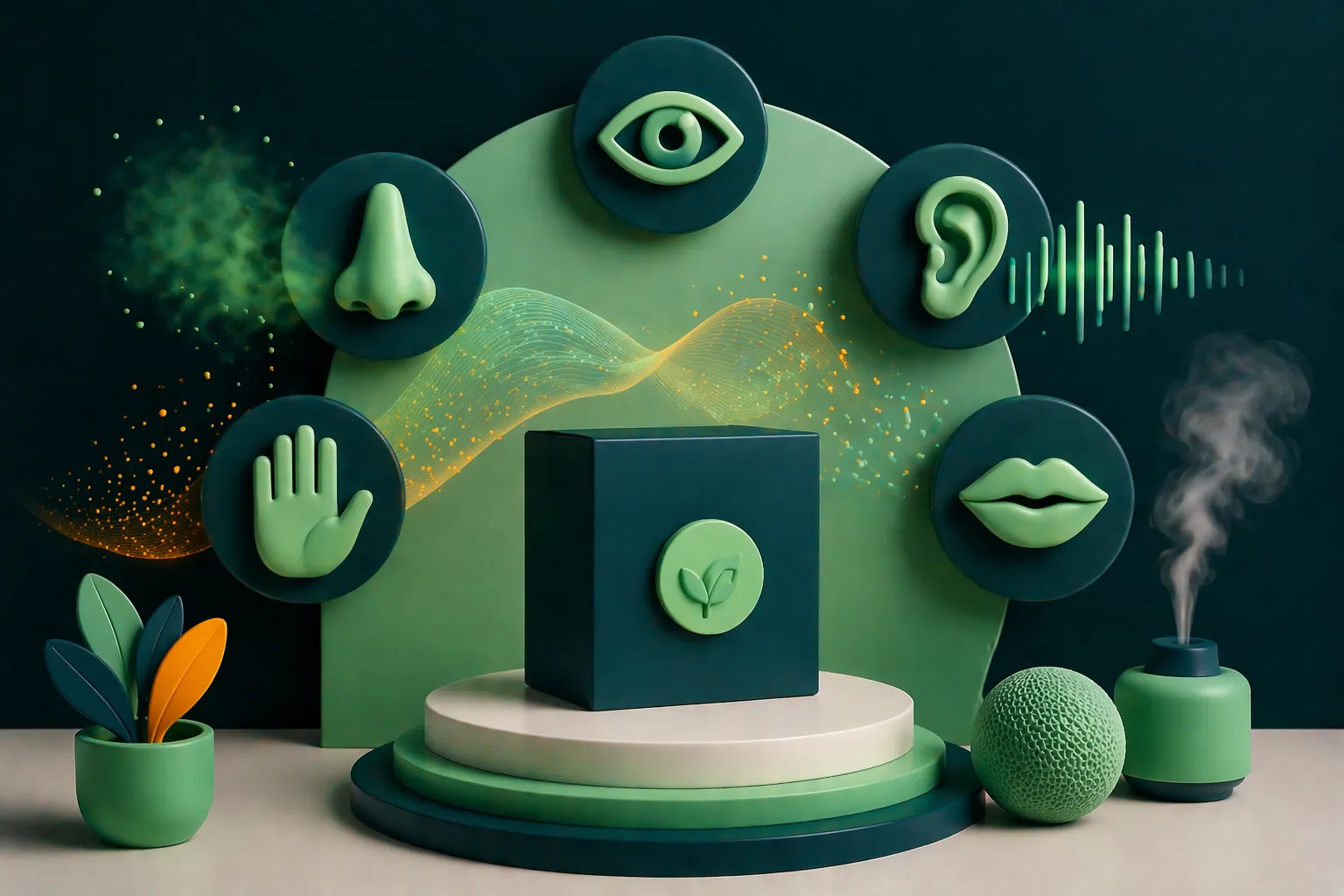
    Multisensory branding is the art of designing brand experiences that hit more than one sense-sight, sound, touch, smell, and sometimes taste.

    Instead of a single logo, think of it as a sensory signature. Your audience may forget what your ad looked like, but they’ll remember the sound of your app notification or the scent of your store.

    Example: Singapore Airlines uses a custom fragrance in its cabins and crew uniforms. That smell is now shorthand for “luxury travel.”

    Why Emotional Brand Connection Beats Pretty Logos

    Smell and sound bypass logic and go straight to emotion. Science says humans are 100 times more likely to remember a smell than a sight. One whiff or sound, and boom-your brand is instantly recalled.

    Rolls-Royce even adds a signature scent to its car interiors to make every new car smell like a classic Rolls. That’s branding at a subconscious level: emotion first, logo second.

    Sensory Branding Strategies That Actually Work

    Here’s how brands are using sensory branding strategies to stand out:

    Scented Logos: Starbucks stores smell like coffee heaven. That’s branding through aroma.

    Sound and Touch in Branding: Bang & Olufsen spent months engineering the perfect “click” of their volume dials.

    Packaging Texture: Chanel uses soft-touch finishes and heavy lids to make you feel luxury before you even open the product.

    None of this is random. Every sense is carefully designed to make you feel something.

    Storytelling in Multisensory Branding

    Good branding tells a story, but great branding makes you feel it.

    Take Lush: you can smell their stores from down the street. That’s not an accident, it’s part of their eco-friendly, playful brand story.

    Or Harley-Davidson, which went as far as trademarking their engine sound. That roar doesn’t just say “motorcycle”-it says “freedom.”

    Tactile Branding: Let People Feel Your Story

    Touch is a branding superpower most companies ignore. The texture of a package, the weight of a product, even the way a box opens creates a memory.

    Example: Montblanc pens feel substantial in your hand. That weight screams “premium.”

    Apple’s slow, smooth unboxing experience isn’t just pretty, it’s designed to make the product feel worth every rupee.

    Smell in Branding: The Most Underrated Tool

    Smell is branding’s secret weapon. It’s emotional, instant, and impossible to ignore.
    Cinnabon places ovens near the front so the scent pulls you in.

    Nike makes their stores smell like new shoes-because nostalgia sells.

    Westin Hotels has a signature “white tea” scent that makes every hotel feel like home.

    This is smell in branding at its best-subtle, powerful, and unforgettable.

    Scented Logos Are a Real Thing

    A scented logo is just like a visual logo, but for your nose. A custom scent becomes a brand’s signature. Luxury hotels and retailers are already investing heavily in scent marketing because smell creates trust and recognition faster than any ad ever could. even a video intro.

    Why This Matters in 2025

    We’re living in a hyper-visual world. Logos, ads, and content are everywhere. The brands that win are the ones that appeal to all senses.Sound and touch in branding give your brand personality. Smell adds depth. And together, these create a memory your audience won’t scroll past.

    The Takeaway

    Branding isn’t just what people see; it’s what they feel, hear, and smell.

    Smart companies are using tactile branding, scented logos, and other sensory branding strategies to create a full experience that builds emotional brand connections customers can’t forget.

    So, next time you plan a campaign, don’t just ask, “Does it look good?” Ask, “Does it feel good? Does it smell like us? Does it sound like us?” That’s how you create a brand no one forgets.

  • Design that Converts: Why Good UX Is the Real Hero of Your Website

    Design that Converts: Why Good UX Is the Real Hero of Your Website

    If your website is the digital face of your brand, user experience is the personality behind it. And trust us, people can tell the difference between charming and “something feels… off.”

    Too many brands treat user experience and web design like optional garnishes—”Oh, we’ll add some animations and hope it feels fancy.”

    But in the real world? Good user experience websites do the heavy lifting.
    They turn browsers into buyers, visitors into evangelists, and your bounce rate into a number you can actually share in meetings.

    What is UX and Why Should You Care?

    User experience in web design isn’t just about making things look pretty. It’s about designing a journey that’s so seamless, your users don’t even realise they’re on a journey. From the second someone lands on your homepage to the final click on your checkout page, every touchpoint matters.

    Great UX is:

    • Intuitive navigation
    • Clear CTAs (not 47 buttons that all say “Click here”)
    • Fast load times
    • Mobile-friendly layouts

    Think of Apple’s website. You don’t get lost. You don’t second guess. You float. That’s user experience and web design working hand in hand like besties on a mission.

    Good Design = Real Business Impact

    A high-converting website design isn’t just a creative flex. It’s a business asset.

    Let’s say you have 10,000 monthly visitors. If your website UX is poor and only 1% convert, that’s 100 customers. Improve your UX, double your conversion rate to 2%? Boom. 200 customers. No extra traffic needed.

    Airbnb is a classic example. When they redesigned their website with better UX in mind—cleaner filters, better booking flow, clearer photos—bookings skyrocketed. Because when it feels easy, people commit.

    From Visitor to Customer: The Journey

    You can’t just expect people to land on your site and instantly click “Buy Now.”

    You need to:

    • Greet them with clarity (no weird carousels with mystery messaging)
    • Earn trust (hello, reviews, clear policies, human language)
    • Make it easy to act (no 14-field checkout forms, please)

    Want websites with the best UX? Look at Dropbox or Notion. Both make signing up or exploring feel frictionless. They’re not trying to impress you with jargon. They’re trying to make your life easier. And that’s what converts.In short, if you want to turn visitors into customers, smooth the road for them. Simplify the journey. Make sure nothing gets in the way of the action you want them to take.

    Digital Brand Presence = Online Reputation

    Your website is your silent pitch. It’s selling when you’re sleeping. It’s building (or breaking) trust every time someone clicks a link.

    Digital brand presence isn’t just about being found. It’s about being remembered.

    If your site looks like it time-travelled from 2011 or feels like a puzzle no one wants to solve, your brand suffers. Period.

    And if you think a homepage filled with stock photos and a paragraph that starts with “We are a leading provider of solutions” is going to cut it—we need to talk.

    The ROI of UX

    Investing in user experience and web design gives tangible returns:

    • Lower bounce rates
    • Longer session durations
    • Higher customer satisfaction
    • More word-of-mouth referrals
    • And most importantly: you convert website visitors into customers.

    In fact, a Forrester study found that every $1 invested in UX brings $100 in return.


    Brands That Nail It

    • Duolingo: Gamified UX, friendly owl, fast onboarding. You want to keep going. That’s good user experience websites at work.
    • Zappos: Legendary for customer support, easy-to-navigate, filters that actually work. They don’t just convert website visitors into customers, they turn them into loyal fans.
    • Headspace: Soft colours, friendly tone, intuitive app and web UX. Even their error pages feel calming. Great websites with good UX design don’t just work, they feel good.
    • Narrative x Bima Central: When Narrative reimagined the website and email journey for Bima Central, a digital insurance platform by CAMSRep, the focus wasn’t on flashy design—it was on function. Clean layouts, clear CTAs, user-first structure, and trust-driven content led to higher engagement and action. The result? More users explored, clicked, and converted. That’s what a high-converting website design does: it delivers.

    In Short:

    A pretty site might get you a few compliments. A smart, user-friendly site gets you conversions.
    So if you’re trying to convert website visitors into customers and turn your digital brand presence into a lead-generating machine, it’s time to stop treating UX like an afterthought. Because the websites with the best UX? They’re not just nice to look at. They make money while you sip your coffee.

    Let your design work smarter—not harder.

  • How Strategic Thinking Transforms Campaign Outcomes

    How Strategic Thinking Transforms Campaign Outcomes

    “If your marketing campaign feels like throwing glitter at a fan and hoping it sticks, this one’s for you.”

    Let’s be honest, anyone can make a campaign look good. Throw in some flashy visuals, a punchy headline, maybe a celebrity talking about “authenticity,” and boom, people might notice.

    But without strategy? It’s just an expensive cake with decoration and no taste.

    Strategic thinking in marketing isn’t just a line on your pitch deck. It’s the reason some brands launch with impact, while others fizzle before the first click.

    Just look at how Narrative repositioned Karnataka’s Global Investors Meet 2025 not as another business event, but as a global conversation on inclusive, tech-driven economic growth. 

    Strategy Isn’t Sexy—But It Sells

    Before you panic: no, this isn’t a manifesto against creativity. This is about pairing creative campaign strategy with serious brains. You need ideas that sing and systems that scale.

    The best campaigns are equal parts heart and head. They don’t just show up on your feed—they show up with intention. And that’s the power of strategic brand communication: it gives creativity a purpose and performance a plan.

    Example: Dove’s “Real Beauty” campaign wasn’t just a pretty face. It was backed by strategic insights around representation and self-esteem, turning emotional truth into global engagement.

    From Chaos to Cohesion: The Role of Integrated Strategy

    Let’s talk alignment.

    A billboard in Kormangala (that’s in Bangalore btw). A reel in someone’s bathroom scroll zone. A jingle on Spotify. If they’re not singing the same tune, you’re just spamming people in stereo.

    A good integrated campaign strategy connects every touchpoint from offline to online with a single thread. That’s the magic of an integrated marketing campaign: it’s not about being everywhere, it’s about being everywhere with a point.

    Example: Nike’s “You Can’t Stop Us” united TV, social, digital, and athlete activations under a single, powerful story.

    Strategy That Starts With Story

    You don’t need another trend. You need a story.

    Enter: brand storytelling strategy. This is where your campaign stops being a sales pitch and starts being a narrative your audience can step into. What do you stand for? What problem are you solving? Why should anyone care?

    If your answers sound like your competitor’s LinkedIn summary, you’re not doing it right. Strategy is what turns those answers into emotional anchors.

    Example: Airbnb’s “Belong Anywhere” repositioned the entire brand around emotional storytelling instead of just bookings.

    But… What Does Strategy Actually Do?

    Glad you asked. Let’s break it down.

    A solid strategy helps:

    • Define your north star (no more aimless creativity)
    • Clarify your audience (no more talking to “everyone”)
    • Set real goals (not “go viral”)
    • Build a roadmap (hello, campaign performance optimisation)

    This is the difference between a one-hit wonder and a high-impact brand campaign.Example:Spotify Wrapped is strategy and storytelling in perfect sync built on user data and designed for shareability.

    The ROI of Smart Strategy

    If you’ve ever had a client ask, “So… what did this campaign actually do?” you already know how valuable strategy is.

    Here’s how to improve campaign performance without resorting to desperate budget boosts:

    • Start with insights, not assumptions
    • Marry emotion with data
    • Optimise based on actual behaviour, not wishful thinking

    This is where effective brand communication meets analytics. Strategy makes sure your message lands—again and again.

    Example: Old Spice’s “Smell Like a Man, Man” used performance data to iterate the campaign over years, driving ongoing success.

    Real Talk: What Strategic Thinking Looks Like in Action

    Let’s say you’re launching a new product. You could:

    1. Make a flashy launch film, drop it on YouTube, and pray.
    2. OR you could build a creative campaign strategy that includes influencer teases, email anticipation, in-store storytelling, and post-launch nurture loops.

    Guess which one performs better?

    The best strategies aren’t just creative, they’re layered. They give your campaign space to breathe, evolve, and sell long after launch day.

    Example: Apple’s product launches are strategic theatre, every detail is designed for engagement, coverage, and conversion.

    Okay, But How Do I Actually Build Strategic Campaigns?

    Some quick-fire rules to keep you grounded (and sane):

    • Think audience-first, not brand-first. Your user doesn’t care how clever your tagline is if it doesn’t solve their problem.
    • Be ruthlessly consistent. Great strategy survives five platforms, six formats, and seven stakeholders.
    • Use data—but don’t lose soul. Insights are ingredients, not the recipe.
    • Always optimise. Always. If your campaign’s flying blind after launch, you’re burning money.

    The ultimate flex? A data-driven marketing campaign that makes people feel and click.

    In Short

    Without strategy, you’re gambling. With it, you’re building.

    Because let’s be honest, creativity gets attention. Strategy gets results. And when the two work together? You’ve got a campaign that doesn’t just go viral, it goes places.

    That’s the difference between forgettable fluff and brand-building gold.

    So the next time you’re tempted to jump into execution mode, take a step back. Ask the big questions. Find the human truth. Build the plan. Then execute with fire.Because in the end, anyone can make a campaign.


  • Why Great Campaigns start with Human Truth

    Why Great Campaigns start with Human Truth

    If your campaign says ‘We’re here for you’ but your customer service holds me hostage for 48 minutes to speak to a bot, you don’t need an ad, you need therapy.

    Let’s call it like this. People are tired. Tired of empty slogans. Tired of perfect stock photos of smiling families holding salad bowls. Tired of brands telling them how much they “care” while ghosting them on DMs.

    And yet every now and then, a campaign slips through that actually makes you feel something. A commercial that doesn’t just try to sell you shampoo, but sells you a story. That’s emotional marketing. And it works because it’s real. It doesn’t feel like a forced pitch. It feels like a conversation with your friend. Take Bima Central’s email campaign we did, it didn’t scream “buy now,” it simply showed up with clarity, empathy, and just enough nudge to feel like help, not hard sell.

    Why Campaigns Need Emotional Connection

    You could have the best product in the world. But if your brand comes across like a robot with a LinkedIn profile, nobody’s sticking around.

    In today’s world, relatability > reach. Audiences crave honesty, vulnerability, and yes, a little bit of humour. That’s where human-centric advertising comes in.

    Brands that get this build loyalty, not just traffic.

    Creative Brand Campaigns That Got It Right

    Let’s talk winners:

    Apple – “The Greatest An inclusive, powerful ad showing people with disabilities using Apple products. No dialogue. Just real people, real moments.
    Barbie – The 2023 Campaign Nostalgia, identity, existential crises wrapped in pink. This wasn’t just movie marketing. It was a movement.
    Dove – “Real Beauty” Showed women as they really are not how Photoshop makes them. It hit home.
    Each of these are human-centric campaigns rooted in real stories, not slogans.

    What Most Brands Get Horribly Wrong

    Let’s be honest:

    • They chase trends instead of truths.
    • They confuse mood boards for messaging.
    • They slap sad piano music on a montage and call it “impactful.”

    The result? Glossy, expensive ads that feel… nothing. Because they say a lot, but mean very little.

    Human Truths in Advertising: What That Actually Means

    It means starting from the real stuff—frustrations, joy, insecurity, pride. Not from what looks good on a billboard.A brand communication service worth its salt will ask, “What’s the emotional undercurrent here?” Not just, “What colours are on-trend this quarter?”

    How to Start Telling the Truth (and Still Sell Things)

    You don’t have to choose between emotion and sales. That’s a false choice. The smartest brands do both.

    Here’s how:

    • Lead with a feeling, not a feature.
    • Make it specific. Not “we care,” but show me how you care.
    • Use humour, vulnerability, or honesty but only if it’s true.
    • Don’t shout. Speak like a human.

    Because brand communication services today need less jargon and more gut-punch.

    In short

    We live in the age of cynicism. People can smell inauthenticity from a mile away. That’s why great advertising doesn’t just inform—it connects. It listens. It tells the truth.

    So next time you plan a campaign, ask yourself: Are you giving people a pitch—or a pulse?

    Because the best creative brand campaigns aren’t just clever. They’re honest. And in a world of noise, honesty is the loudest thing you can say.That’s emotional economics. And that’s what we do at Narrative Asia.

  • The Scroll Stops Here: Reels, Brand Films & Everything In Between

    The Scroll Stops Here: Reels, Brand Films & Everything In Between

    Picking the Right Format for the Right Message

    If content is king, video is the throne. And not just any video, the right one, in the right format, at the right time. Because let’s be honest , in a world where we scroll faster than we think, your brand has mere seconds to make someone care. 

    That’s where short-form video marketing, brand film production, and a smart video content strategy come in.

    This blog is a no-bluff, rather it’s a slightly cheeky guide to choosing between a zippy reel or an incredible brand film and when to use what. 

    The Brand Film

    Branded short films are basically your Netflix moment where you will think of brand storytelling videos as your Oscar submission where your values, purpose, and big “why” shine. These long-form, emotional, cinematic pieces help your audience understand not just what you do but who you are.

    Example: Google’s “Year in Search”

    The Reels

    Reels for business are quick, fun, and algorithms push them. Perfect for short videos marketing, they stop the scroll with punchy visuals and bold hooks. Think of them as the teaser trailer for your brand, just add scroll-stopping content to it.

    Example: Duolingo’s content, they’re Pure genius

    Sip-Worthy Storytelling

    A branded short film blends entertainment and message. You’re not selling directly, you’re making people feel something. And when they feel, they remember. These are ideal when you want to build long-term connections, not just clicks.

    Example: Patagonia’s “Blue Heart” short film.

    Long Form vs Short Form: The Great Attention Span Debate

    Long-form vs short form video boils down to intention.
    Here’s the tea:

    Long-form is usually 60 sec–3 mins which builds narrative, emotional impact in the audience. Where in Short-form is usually under 30 secs which are High reach, and definitely more chances of high shareability.

    The trick? It’s not either-or—it’s both, strategically sequenced. Start with a Reel, follow with a product film, retarget with a testimonial. That’s how video content strategy works.

    Size Doesn’t Matter

    Different platforms have different vibes. You need to understand what fits the most, or sometimes all. Instagram reels are vertical, mostly below 30 seconds.

    LinkedIn is all about Talking head, to the point and no bullshit. YouTube can be used for both long form brand videos and shorts, they have it all, it is up to you to decide what can work best for the brand. 

    It’s not just about cropping. It’s about context.

    Example: Shopify’s vertical video series on entrepreneur tips.

    Creative Vertical Video

    Creative vertical video isn’t a compromise. It’s a canvas. Done right, vertical content can be just as cinematic and compelling as traditional formats—just faster and more efficient.  They’re best for product teasers, testimonials, team intros, trend-driven posts.

    Example: Glossier’s YouTube Shorts-sweet and super branded.

    Marketing Video Types : Choosing the Right Tool for the Job

    There’s no one-size-fits-all when it comes to video. Each type serves a different purpose and knowing when to use what can make your content work a lot harder.

    Here’s a breakdown

    Brand Films

    These are big-picture, high-impact videos that express your brand’s purpose, values, and personality. They’re made to connect emotionally, not just inform. Great for shaping perception and telling your brand story in a meaningful way.
    Use for: Brand launches, rebrands, investor decks, or your homepage hero section.

    Example: Nike – “You Can’t Stop Us”

    Product Explainers

    These videos break down what your product or service does in a clear and simple way. They’re practical, helpful, and great for building understanding.
    Use for: Landing pages, sales pitches, onboarding, or paid ads.

    Example:Notion – “What is Notion?”

    Reels

    Short, sharp, and made to stop the scroll. Reels are perfect for quick messages, behind-the-scenes content, or hopping on trends. They’re all about grabbing attention and staying visible on social media.
    Use for: Instagram, LinkedIn, YouTube Shorts—anywhere you want to stay top of mind.

    Example: Morning Brew uses short-form videos to deliver business news with wit and clarity.

    Testimonials

    Let your customers speak for you. Testimonial videos show real people sharing their real experiences, which makes them a powerful trust-builder.
    Use for: Website, lead nurturing, email marketing, or closing deals.

    Example: Airbnb Host Testimonials

    Campaign Launch Videos

    These are the high-energy, bold pieces that kick off new initiatives. Think product drops, rebrands, new services—anything where you want buzz and momentum from day one.

    Example: Spotify Wrapped Video 2023

    Each of these video types supports a different stage of your content journey. When planned together, they create a strategy that moves people from awareness to action, without ever feeling like a hard sell.

    Storytelling Through Video

    People don’t remember data, they remember stories. That’s why storytelling through video works. It takes your message and turns it into a moment. One that sticks. One that spreads. Whether you’re making them laugh, cry, or say “wait, who made this?”—you’re building connections, not just clicks.

    In Short

    In a world of content fatigue, video is your shortcut to attention and connection. Whether it’s a 15-second Reel or a full-blown brand film, the format isn’t just a creative decision; it’s a strategic one.

    Brands that get this right don’t just create noise, they create meaning. Because in the end, the scroll only stops when the story starts.

    Make them stop. Make them care. Make it with Narrative Asia.

  • How Barbie used Breadcrumb Strategy to Paint the Town Pink

    How Barbie used Breadcrumb Strategy to Paint the Town Pink

    Friday, our office dog does not obey any orders unless crumbs of cookies are served to her. Only then does she excitedly raise her right paw for a handshake, or even sit. It’s quite a hassle as a dog owner, but this is exactly what brands have to go through when they want to entice an audience.

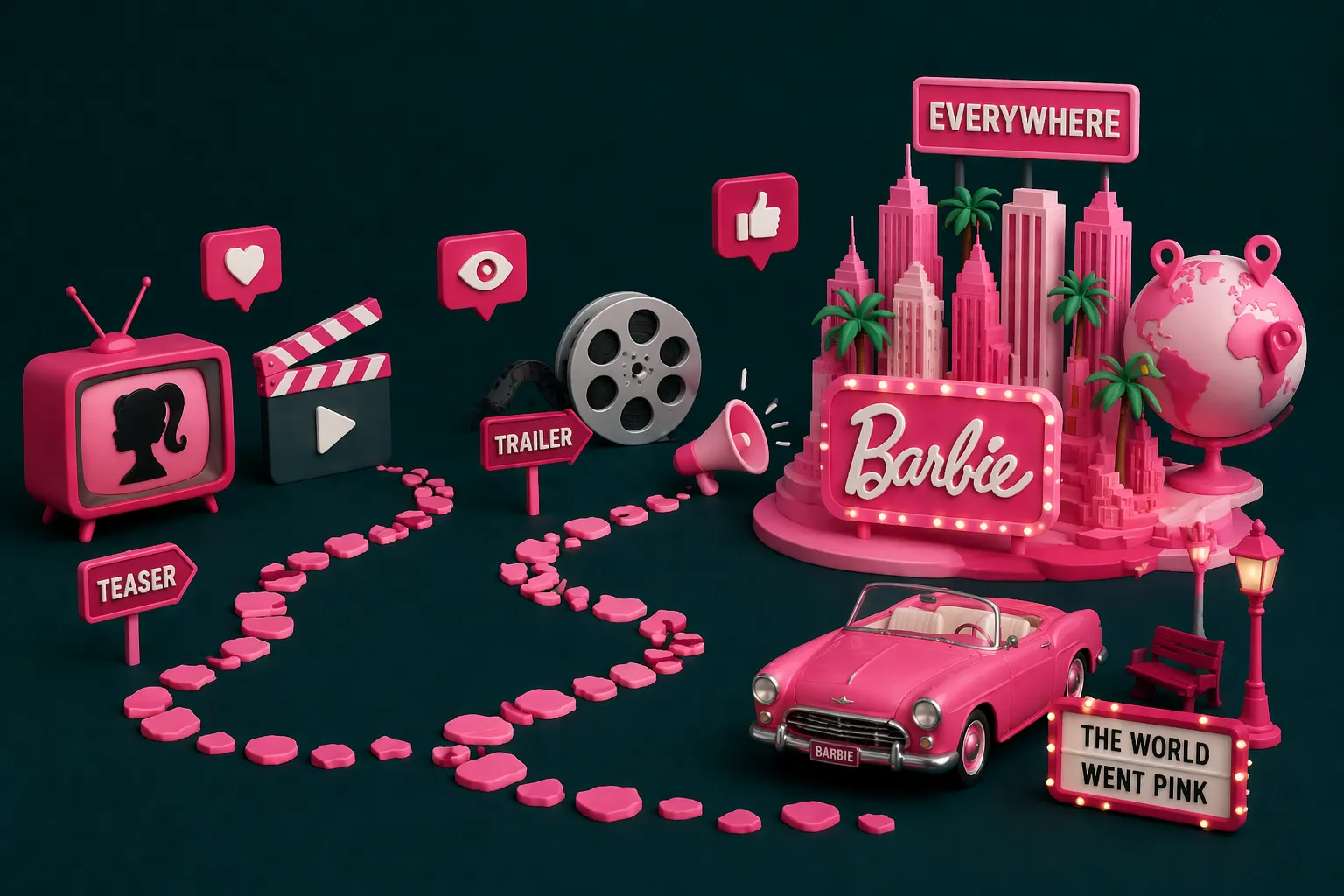
    Serving tidbits to your audience at every stage to motivate them or lead them to the end goal is called the breadcrumb strategy. And as of recently, Barbie has done it exceptionally well. From creating a colour shortage to bringing back pink in the most phenomenal way possible, the world was re-enchanted with the Barbie doll in her Barbie world. 
    Barbie breadcrumbed her way to a $1.446 billion collection at the box office, a mega revival of theatres post-pandemic.

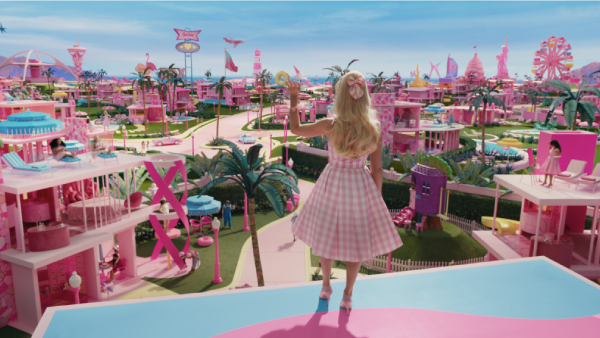
    Picture credits: Wallpaper Cave

    Why the Breadcrumb Strategy?

    Let’s rewind to what exactly inspired the breadcrumb strategy.

    Hansel and Gretel — a childhood fairy tale of a sibling duo escaping the witch of the woods. They escape the witch’s gingerbread house by leaving a trail of breadcrumbs leading home. Although it did not really work out for them in the story, this idea was welcomed with open arms by marketers around the world. 

    Mattel and Warner Bros Kicked-off with a classic teaser launch, it was a walk down memory lane for the majority of the world. Watching a life-size doll that once was the symbol of childhood come to life — surreal. The only twist was how inclusive the doll had become. Mattel planned to renew Barbie’s image from being more than a plastic figure of perfection to a newer, more realistic version — with flaws, ambitions & issues that graze human life.

    The teasers and trailers were followed by a marketing strategy that brought the world’s attention, even Christopher Nolan could not prevent this pink grenade from exploding. 

    What was next?

    Social media, AI, influencers, brands, everyone jumped into this nostalgic bandwagon, using Barbie’s iconic pink. 

    Nostalgia – Barbie is nostalgic, whether you love the doll or hate it, you could not ignore it. She was everything a girl wanted. Tapping into the audience’s bond with the doll was probably the most obvious thing Mattel could do, and they nailed it. Whether it was bringing the fashion back or re-visiting discontinued models, every Barbie enthusiast, old and new connected.

    AI –  Mattel aced the AI game. Users could star in their own Barbie poster, this tool was used over 13 million times, by the general audience and celebrities.

    Brand Collaborations – Mattel collaborated with multiple brands across industries, it started off with the obvious fashion and travel industry, the trend caught on with unexpected brands joining the hype train. Microsoft created a Barbie-edition Xbox, Barbie-pink dental kits were sold, a whole Airbnb was transformed into a playhouse, the world had synced with this phenomenon. 

    Mattel and Warner Bros strategically served mini cookies to its audience, keeping them on their toes and getting them excited with the otherworldly collaborations & nostalgic Barbie moments. In fact, a user even posted a picture of a pink sunset and lauded Mattel for their undying efforts to keep the campaign going!  

    The audience savoured every cookie that was dropped up until the movie was released, and what a mega hit it was. Love it or hate it Barbie reigned supreme thanks to a brilliant marketing strategy.

    What can brands learn from Barbie’s Breadcrumb marketing strategy

    1. Breadcrumb your way through every event: Whether it’s a social media post or a website launch make sure your audience feels the anticipation. Serve them tidbits of information or fun elements till the day of the event.
    2. Get creative: Your audience will always appreciate creative and fun content, it’s an easy way to get them to engage with your brand and leave with a great impression.
    3. Plan Plan Plan: Strategize and create a roadmap to how you want the campaign or project to go. This keeps things organised and ensures quality check. 

    At Narrative, we understand the needs of your brand. Every campaign is tailored with innovative thinking and planning. We believe that to reach the ultimate goal it is necessary to create a conversation around the campaign before even implementing it.